If you are looking for a simple, safe and completely free way to enjoy movies and series on your cell phone, tablet or TV, Tubi – Free Movies and Series stands out as one of the best options available in 2026. With an impressive collection, a clean interface, and support for Portuguese subtitles, the app offers access to thousands of titles free of charge. And best of all, it's available for direct download from the official stores:

Tubi: Free Movies & Live TV
Smart Factory Technology in 2026: 12 Investments With the Highest ROI
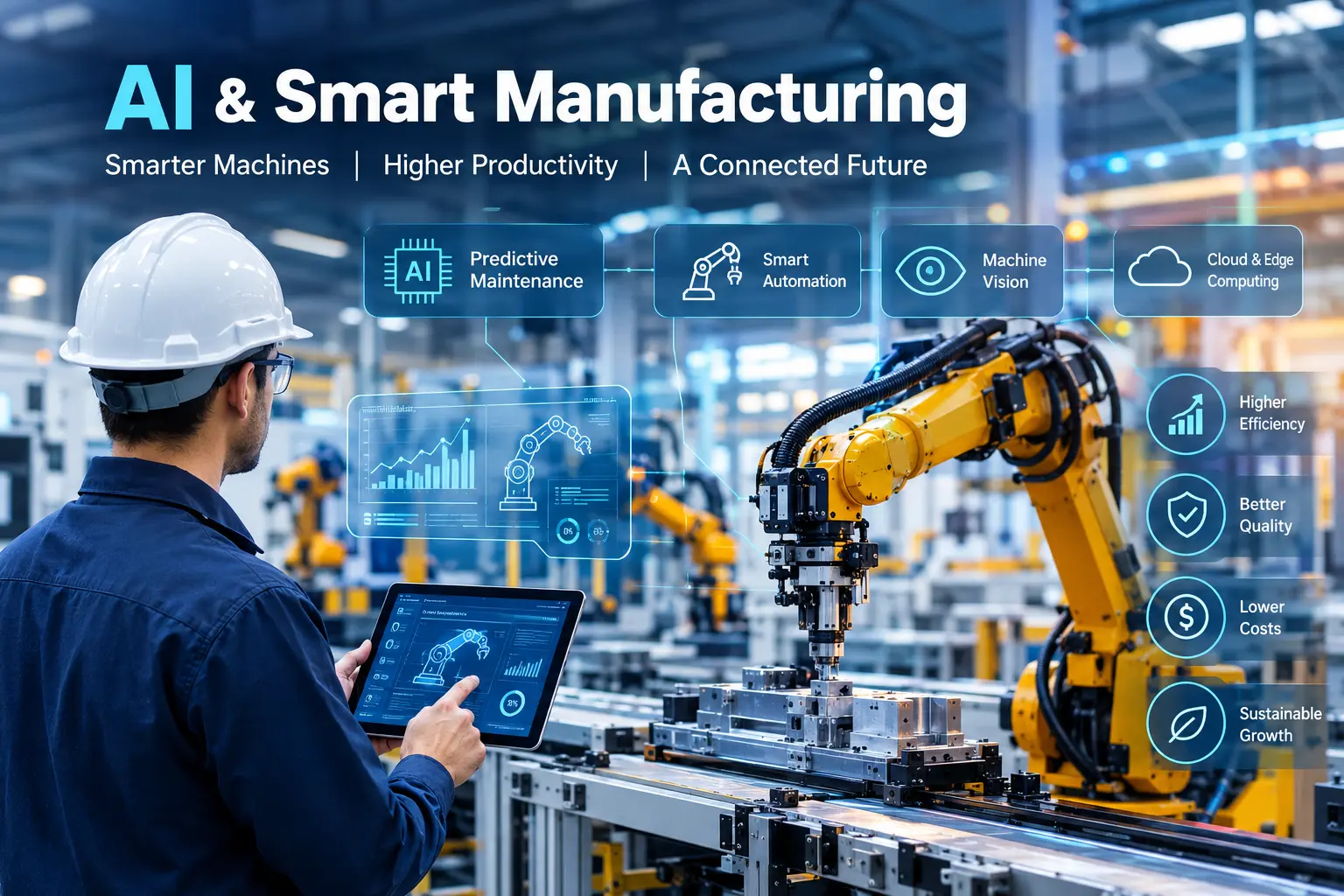
Capital budgets for factory technology are not unlimited, and every manufacturing leader eventually faces the same challenge: a long list of promising smart factory investments and a much shorter list of dollars available to fund them this year. Some technologies pay for themselves within months by closing an obvious, expensive gap, such as unplanned downtime on a bottleneck machine. Others take much longer to deliver a return but build a foundation that makes every future investment more valuable. Knowing the difference is essential for building a capital plan that delivers real results rather than a scattered collection of pilot projects that never scale.
This guide ranks twelve of the smart factory investments delivering the strongest return on investment in 2026, organized around how quickly each one typically pays back and how complex it is to implement, so manufacturing leaders can build a prioritized roadmap rather than trying to fund everything at once.
1. Predictive Maintenance Sensors and Software
Predictive maintenance consistently ranks among the fastest payback investments available to manufacturers, because the cost of unplanned downtime on a critical machine is almost always dramatically higher than the cost of the sensors and software needed to predict and prevent it. Retrofitting a handful of vibration and temperature sensors onto a plant's most critical, highest downtime cost machines typically requires a modest initial investment and can begin flagging developing issues within weeks of installation, making this one of the easiest cases to build for a first smart factory investment. Because this technology can be layered onto existing equipment without requiring any production line redesign, it also tends to face less internal resistance than investments that visibly change how the physical line operates, further shortening the time from approval to measurable results.
2. AI-Powered Quality Inspection
Automated visual inspection using machine vision and deep learning delivers strong ROI wherever manual inspection is currently catching defects inconsistently or too late in the process. The return comes from reduced scrap, fewer warranty claims, and lower labor cost associated with manual sampling based inspection, and payback tends to be fastest on high volume lines where even a small improvement in defect catch rate translates into a large absolute reduction in costly downstream failures. Manufacturers evaluating this investment should pay particular attention to how well a given vision system handles their specific product's natural variation, since a system poorly matched to the actual defect types present will underdeliver on ROI regardless of how impressive its underlying AI model appears in a vendor demonstration.
3. Energy Management and Monitoring Systems
AI driven energy management systems that track consumption at the individual machine level and automatically shift non critical loads to lower cost periods deliver a highly predictable, easily measurable return, since energy savings show up directly on the utility bill each month. This makes energy management one of the easiest investments to justify financially, particularly in facilities running energy intensive processes such as compressed air systems, industrial ovens, or large motor driven equipment. Because the financial benefit is visible in existing utility billing data without requiring any new measurement infrastructure to prove, this category also tends to be one of the easiest to get approved quickly by finance leadership.
4. Autonomous Mobile Robots for Material Handling
Autonomous mobile robots deliver strong ROI in facilities with significant manual material transport tasks, since they reduce labor cost while also improving the consistency and speed of internal logistics compared to manual forklift operation. Payback tends to be faster in facilities running multiple shifts, since the same robotic asset can operate around the clock without the labor cost multiplier associated with staffing multiple human shifts for the same task.
5. Manufacturing Execution System Upgrades
A modern manufacturing execution system that connects machine level data to production scheduling, quality records, and inventory management delivers ROI primarily through better visibility and reduced administrative overhead, eliminating the manual data entry and reconciliation work that consumes significant staff time in facilities still relying on paper records or disconnected spreadsheets. While the payback period is typically longer than more narrowly scoped technologies on this list, a strong manufacturing execution system also acts as a foundation that makes many other smart factory investments, including predictive maintenance and AI scheduling, considerably more valuable once properly integrated. Manufacturers should also weigh the significant change management effort this category typically requires, since a manufacturing execution system touches nearly every role on the plant floor and its ROI depends heavily on staff actually adopting the new workflows rather than continuing to rely on the paper based or spreadsheet driven processes it was meant to replace.
6. Digital Twin Simulation
Digital twins deliver their strongest ROI by preventing expensive mistakes before they happen, allowing engineers to test process changes, new product configurations, or line reconfigurations virtually rather than through costly trial and error on the physical production line. This makes digital twin investment particularly valuable for facilities that frequently introduce new products or make significant process changes, while facilities running highly stable, unchanging processes may see a longer payback period since there are fewer opportunities to apply the simulation capability.
7. Collaborative Robots for Repetitive Tasks
Cobots deliver ROI through a combination of labor cost reduction and improved ergonomics, taking over repetitive, physically taxing tasks that contribute to worker fatigue and injury risk. Because cobots are generally less expensive and faster to deploy than traditional caged industrial robots, and do not require the extensive safety infrastructure of fixed automation, they often deliver a faster payback than fully automating a task with conventional robotics, particularly for smaller production runs where full automation would not otherwise be cost justified.
8. Industrial IoT Connectivity Retrofits
Adding basic sensing and connectivity to previously unmonitored legacy equipment is one of the lowest cost entries on this list, and it delivers value both directly, through basic condition visibility, and indirectly, by creating the data foundation needed for more advanced applications such as predictive maintenance and process optimization to be added later. Manufacturers should view this as a foundational investment that pays for itself through immediate monitoring value while also increasing the return on every subsequent smart factory investment built on top of that same connected infrastructure.
9. Industrial Cybersecurity for Connected Equipment
Cybersecurity investment for operational technology does not generate revenue directly, but it delivers ROI by preventing the potentially catastrophic cost of a ransomware attack or targeted breach against connected industrial equipment, a risk that grows directly in proportion to how many other smart factory technologies on this list a manufacturer deploys. Manufacturers should treat cybersecurity spending as a required companion to every other connectivity investment rather than an optional add on considered only after a security incident has already occurred.
10. Warehouse and Inventory Automation With AI Forecasting
AI driven demand forecasting combined with automated inventory tracking reduces both stockouts, which cause missed production schedules, and excess inventory, which ties up working capital unnecessarily. ROI here tends to scale with how much product variety and demand volatility a facility experiences, with manufacturers running high mix, variable demand operations typically seeing a faster and larger return than those running a small number of highly stable, predictable product lines.
11. Augmented Reality for Training and Remote Assistance
Augmented reality tools that overlay step by step instructions onto a technician's real world view, or connect a junior technician with a remote expert who can see exactly what they see, deliver ROI primarily through reduced training time and faster issue resolution, particularly valuable for manufacturers facing a shortage of experienced maintenance staff. Payback tends to be strongest in facilities with frequent equipment variety or complex procedures, where the alternative would otherwise require extensive documentation or scarce, experienced staff traveling between multiple sites.
12. Additive Manufacturing for Tooling and Spare Parts
Industrial 3D printing delivers strong ROI when used to produce custom tooling, jigs, fixtures, or spare parts on demand, reducing both the cost and lead time compared to traditional outsourced manufacturing or maintaining large physical spare parts inventories. This investment tends to pay back fastest for manufacturers with unique or legacy equipment where replacement parts are expensive or slow to source through traditional supply chains, while facilities relying entirely on standard, readily available parts may see a smaller relative benefit.
Ranking These Investments by Payback Speed and Complexity
| Investment | Typical Payback Speed | Implementation Complexity |
|---|---|---|
| Predictive Maintenance | Fast | Low to moderate |
| Energy Management Systems | Fast | Low |
| Industrial IoT Connectivity Retrofits | Fast | Low |
| AI-Powered Quality Inspection | Moderate | Moderate |
| Collaborative Robots | Moderate | Low to moderate |
| Autonomous Mobile Robots | Moderate | Moderate |
| Warehouse and Inventory Automation | Moderate | Moderate |
| Additive Manufacturing | Moderate | Low to moderate |
| Augmented Reality Training | Moderate to slow | Moderate |
| Digital Twin Simulation | Slower | High |
| Manufacturing Execution System Upgrade | Slower | High |
| Industrial Cybersecurity | Risk avoidance, not direct payback | Moderate to high |
How to Prioritize When the Budget Does Not Cover Everything
Most manufacturers cannot fund all twelve of these investments in a single budget cycle, which makes prioritization essential. A practical approach starts by identifying the single largest, most quantifiable cost currently being absorbed by the operation, whether that is unplanned downtime on a specific bottleneck machine, excessive energy consumption, or high scrap rates on a particular line, and funding the technology most directly aligned with solving that specific, well understood problem first. Foundational investments such as basic IoT connectivity and cybersecurity should generally be prioritized early even when their own direct ROI is modest, since they increase the return on every subsequent investment built on top of that same data and security infrastructure. Manufacturers should also weigh internal readiness alongside pure financial return, since a technically strong ROI case for a complex investment such as a full manufacturing execution system overhaul can still fail in practice if the organization lacks the internal change management capacity to properly implement and sustain it.
Common Budgeting Mistakes to Avoid
A number of avoidable mistakes tend to undermine smart factory technology budgets year after year. Chasing the most heavily marketed or discussed technology rather than the one that actually addresses the plant's biggest quantified cost is one of the most common, often resulting in an impressive pilot project that never delivers a return proportional to its cost. Underestimating integration and change management costs is another frequent issue, since the software or hardware price quoted by a vendor rarely reflects the full cost of connecting a new system to existing infrastructure and training staff to actually use it effectively. Finally, funding too many small, disconnected pilot projects across different technologies, rather than fully funding and scaling a smaller number of well chosen investments, often results in a portfolio of interesting but ultimately underutilized systems that collectively fail to move the needle on the metrics leadership actually cares about.
Building a Multi Year Smart Factory Investment Roadmap
Rather than treating smart factory investment as a series of isolated annual budget decisions, manufacturers get the strongest long term results by building a multi year roadmap that sequences these twelve investment categories deliberately. A typical sequence starts with foundational, fast payback investments such as IoT connectivity, predictive maintenance on critical assets, and basic cybersecurity, since these deliver quick wins while also building the data infrastructure and organizational confidence needed for larger investments later. Once that foundation is in place, manufacturers can layer on moderate complexity investments such as AI quality inspection, cobots, or autonomous mobile robots, targeting the specific processes where variability or labor cost make the strongest case. Larger, more complex investments such as a full manufacturing execution system overhaul or plant wide digital twin capability are generally best reserved for later in the roadmap, once the organization has already built internal expertise and demonstrated value through earlier, more contained projects, reducing both the technical risk and the organizational change management burden of these larger initiatives. Documenting this roadmap formally, with expected timing and rough budget ranges for each phase, also makes it considerably easier to secure ongoing executive sponsorship, since leadership can see how each year's spending builds toward a coherent long term outcome rather than approving disconnected projects one budget cycle at a time.
How Facility Type Changes Which Investments Rank Highest
The general ROI ranking above shifts meaningfully depending on the specific type of manufacturing facility involved, and leadership teams should adjust their priorities accordingly rather than applying a single generic ranking across every operation. Discrete, high mix manufacturers assembling varied products in smaller batches tend to see the strongest relative returns from cobots and AI quality inspection, since these technologies handle variation well without requiring the extensive reprogramming that fixed automation would need for every product changeover. Continuous process manufacturers running a small number of stable, high volume product lines around the clock typically see their strongest returns from predictive maintenance and energy management, since these facilities depend heavily on continuous uptime and already run at a scale where even small efficiency improvements translate into large absolute savings. Facilities with older, legacy equipment and limited existing connectivity infrastructure generally see the fastest initial returns from basic IoT retrofits and predictive maintenance, since these facilities have the most low hanging opportunity for improvement, while already highly automated, modern facilities may find their strongest incremental returns instead in digital twin simulation and advanced scheduling optimization, since the more basic gains have already been captured.
Financing Options Beyond Traditional Capital Budgets
Manufacturers hesitant to commit large upfront capital to smart factory technology have more flexible financing options available in 2026 than in previous years. Equipment as a service arrangements, where sensors, software, and sometimes even robotics hardware are provided under a subscription model rather than a large upfront purchase, allow manufacturers to spread cost over time and align payments more closely with the ongoing value the technology delivers. Vendor financing tied directly to measured performance improvements, sometimes structured so that a portion of the technology's cost is paid from documented savings it generates, has also become more common, particularly for predictive maintenance and energy management solutions where the financial benefit is relatively easy to measure and attribute directly to the new system. Government and industry grant programs supporting manufacturing modernization and energy efficiency are another avenue worth investigating, since eligibility requirements and available funding vary considerably by region and program but can meaningfully offset the upfront cost of qualifying investments such as energy management systems or connectivity retrofits.
Frequently Asked Questions
Which smart factory investment typically pays back the fastest?
Predictive maintenance on a facility's most critical, highest downtime cost equipment typically delivers the fastest payback, since the cost of unplanned downtime on a bottleneck machine is almost always far higher than the cost of the sensors and software needed to predict and prevent it.
Should smaller manufacturers pursue the same technologies as large enterprises?
Smaller manufacturers can benefit from the same categories of technology, but should generally prioritize the lowest complexity, fastest payback options first, such as targeted predictive maintenance and basic IoT connectivity, before pursuing larger scale investments such as a full manufacturing execution system overhaul that may require more internal resources than a smaller organization can readily support.
How should cybersecurity spending be justified if it does not generate direct revenue?
Cybersecurity spending is best justified as risk avoidance rather than direct revenue generation, comparing the ongoing cost of security investment against the potential cost of a successful attack against connected industrial equipment, which can include extended downtime, data loss, and safety incidents far exceeding the cost of preventive security measures.
Is it better to fund one large smart factory project or several smaller ones?
Most manufacturers see better results funding a smaller number of well chosen, fully resourced projects rather than spreading a limited budget across many small pilot projects, since underfunded pilots often fail to reach the scale needed to demonstrate meaningful, sustainable business impact.
How often should a smart factory investment roadmap be revisited?
Most manufacturing leaders review and adjust their technology roadmap at least annually, since new technology options, changing production priorities, and lessons learned from recently completed projects all affect which investments should be prioritized in the following budget cycle.
What is the difference between condition monitoring and predictive maintenance?
Condition monitoring refers to the ongoing measurement of equipment health indicators, while predictive maintenance goes a step further by using that condition data, combined with analytics or machine learning, to actually forecast when a failure is likely to occur and recommend action, meaning every predictive maintenance program relies on condition monitoring but not every condition monitoring deployment includes true predictive forecasting.
Final Thoughts
Building a high ROI smart factory technology portfolio in 2026 is less about adopting every available innovation and more about sequencing a deliberate set of investments that address a manufacturer's actual, quantified cost drivers, starting with fast payback foundational technologies and building toward larger, more transformative capabilities over time. Manufacturers who resist the temptation to chase every new technology trend and instead build a disciplined, evidence based roadmap consistently see stronger cumulative returns than those pursuing a scattered collection of disconnected pilot projects.