If you are looking for a simple, safe and completely free way to enjoy movies and series on your cell phone, tablet or TV, Tubi – Free Movies and Series stands out as one of the best options available in 2026. With an impressive collection, a clean interface, and support for Portuguese subtitles, the app offers access to thousands of titles free of charge. And best of all, it's available for direct download from the official stores:

Tubi: Free Movies & Live TV
Cloud vs Edge Computing for Industrial Automation: Which Is Better for Your Factory?
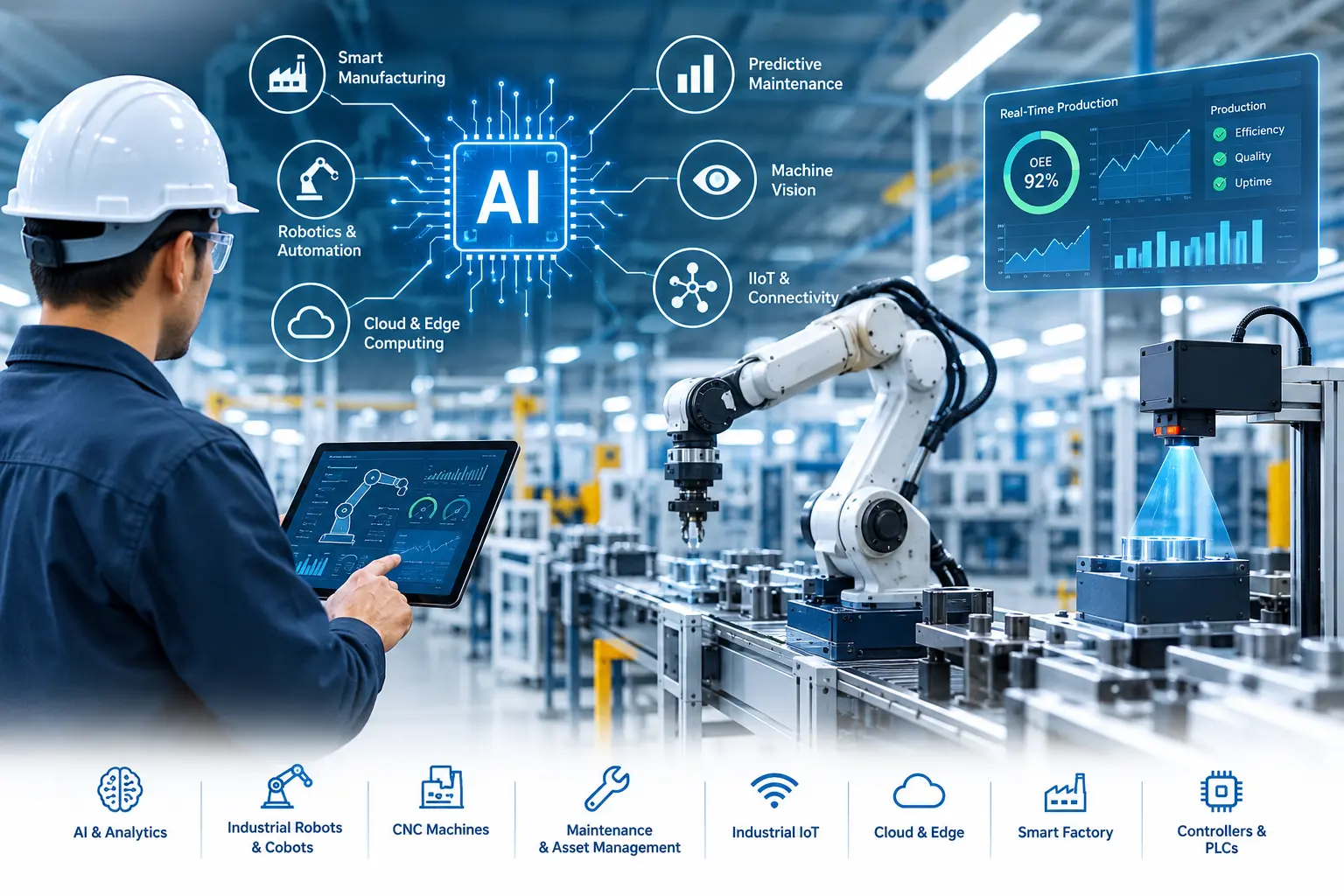
Every industrial automation project involving sensors, cameras, or AI models eventually runs into the same architectural question: where should the actual computing happen. Should raw data be sent to a distant cloud data center for processing, or should the decision be made locally, on hardware sitting just a few feet from the machine generating the data. This is not a purely technical detail buried in a systems diagram, it is a decision that directly affects how fast a system can respond, how much it costs to operate, how resilient it is to network problems, and how easily it scales across a growing number of connected machines and facilities.
Cloud and edge computing are often framed as competing approaches, but in practice, most successful industrial automation architectures use both, assigning each workload to whichever location actually suits its specific requirements. This guide breaks down exactly how cloud and edge computing differ in an industrial context, where each one clearly wins, and how to think through the decision for a specific factory rather than defaulting to a one size fits all answer.
Defining Cloud and Edge Computing in an Industrial Context
Cloud computing, in the context of industrial automation, refers to processing and storing data on remote servers operated by a cloud provider, accessed over the internet from the factory floor. This approach offers virtually unlimited scalability, powerful analytical tools, and the ability to aggregate and compare data across multiple facilities from a single centralized platform. Edge computing, by contrast, refers to processing data locally, on hardware physically located at or very near the machine generating that data, whether that is a dedicated edge gateway device, an industrial PC on the factory floor, or increasingly, processing capability built directly into modern sensors and cameras themselves. This local processing dramatically reduces the time between data generation and a resulting decision or action, and continues functioning even if the facility's connection to the outside internet is temporarily lost.
Comparing Cloud and Edge Computing Across Key Factors
| Factor | Cloud Computing | Edge Computing |
|---|---|---|
| Latency | Higher, dependent on network round trip time | Very low, processing happens locally |
| Reliability During Network Outage | Functionality lost or degraded without connectivity | Continues operating independent of network status |
| Scalability | Very high, virtually unlimited compute available | Limited by local hardware capacity |
| Cross Site Visibility | Strong, naturally centralizes data across facilities | Weaker unless paired with cloud aggregation |
| Bandwidth Requirements | Higher, especially for high frequency sensor data | Lower, only summarized data needs to be transmitted |
| Typical Cost Structure | Ongoing subscription tied to data volume and compute usage | Higher upfront hardware cost, lower ongoing data costs |
| Best Suited For | Cross site analytics, model training, long term storage | Real time control, safety functions, high speed inspection |
Where Edge Computing Clearly Wins
Edge computing is the only sensible choice for applications where even a fraction of a second of delay matters. Real time process control, where a machine needs to adjust a parameter immediately based on a sensor reading, cannot tolerate the round trip delay of sending data to a distant cloud server and waiting for a response, since even a well connected facility experiences network latency measured in tens or hundreds of milliseconds that can be the difference between catching a defect and missing it on a fast moving production line. Safety critical functions represent an even stronger case for edge processing, since a system responsible for triggering an emergency stop cannot depend on external network connectivity to function reliably. High speed machine vision inspection is another strong edge use case, since processing images locally avoids both the latency and the substantial bandwidth cost of streaming continuous high resolution video to a remote server for every single part passing an inspection station.
Where Cloud Computing Clearly Wins
Cloud computing earns its place for workloads that benefit from scale, centralization, and heavy computational power that would be impractical to replicate at every individual edge location. Training sophisticated machine learning models on large historical data sets is generally far more practical in the cloud, where virtually unlimited compute resources can be provisioned temporarily for the training process without requiring a manufacturer to purchase and maintain that same computing power permanently at every individual facility. Cross site benchmarking and analytics, comparing performance across multiple plants to identify best practices or systemic issues, naturally depends on aggregating data centrally, which the cloud handles far more efficiently than trying to coordinate data sharing directly between many separate edge locations. Long term historical data storage is also generally more cost effective and easier to manage in the cloud, given the storage scalability and built in redundancy that cloud providers offer compared to maintaining equivalent long term storage infrastructure on premises at every facility.
The Hybrid Model: Why Most Modern Factories Use Both
Rather than choosing exclusively between cloud and edge computing, most sophisticated industrial automation architectures in 2026 use a hybrid approach, assigning each specific workload to whichever location best matches its latency, bandwidth, and scalability requirements. In a typical hybrid deployment, edge devices handle real time control decisions and initial data processing, calculating summarized metrics or flagging anomalies locally, then transmitting only that condensed, meaningful data upward to the cloud rather than streaming every raw sensor reading continuously. The cloud, in turn, aggregates this data across the entire facility or multiple facilities, running the heavier analytics, model training, and cross site comparisons that edge hardware alone could not practically support. This division of labor captures the responsiveness and resilience benefits of edge computing for the functions that genuinely need them, while still gaining the scalability and centralized visibility benefits of the cloud for the functions that benefit most from that broader perspective.
Cost Considerations: Comparing Total Cost of Ownership
Comparing cloud and edge computing purely on which one is cheaper misses important nuance, since the actual cost comparison depends heavily on the specific workload and how much data it generates. Cloud computing typically involves lower upfront investment but ongoing costs that scale with data volume and compute usage, meaning a workload generating large amounts of continuous high frequency data, such as raw vibration or video data streamed constantly, can become surprisingly expensive to process entirely in the cloud once data transfer and storage costs are fully accounted for. Edge computing generally requires a larger upfront investment in local hardware, but keeps ongoing costs lower for these same high volume workloads, since only summarized or exception based data needs to travel to the cloud rather than the full raw data stream. Manufacturers should model total cost of ownership for their specific expected data volumes under both approaches before committing to an architecture, rather than assuming either cloud or edge computing is inherently cheaper in every situation.
Security Considerations for Each Approach
Both cloud and edge architectures introduce distinct security considerations that manufacturers need to plan for carefully. Cloud based systems depend on the security practices of the cloud provider and the encryption used for data transmitted between the factory and the remote data center, making network security and access control for that data pathway a critical focus area. Edge computing keeps more data physically within the facility, which some manufacturers view as reducing exposure to certain categories of external attack, but it also means each individual edge device represents its own potential point of vulnerability that needs to be secured, patched, and monitored, multiplying the total number of endpoints requiring active security management compared to a more centralized cloud architecture. In practice, a well designed hybrid architecture requires strong security practices at both layers, including network segmentation between edge devices and broader business networks, regular firmware updates for edge hardware, and strong encryption and access control for data flowing to and from the cloud.
A Practical Decision Framework
Manufacturers deciding where a specific workload should run can work through a few straightforward questions. First, does the application require a response within milliseconds, such as real time control or safety functions, in which case edge processing is essentially mandatory regardless of other considerations. Second, how much raw data does the workload generate, since very high volume, high frequency data sources such as continuous video or vibration monitoring often make more economic sense to process locally at the edge, transmitting only summarized results to the cloud. Third, does the workload benefit from being compared or aggregated across multiple machines, lines, or facilities, a characteristic that generally favors cloud processing given its natural strength in centralizing and comparing data at scale. Finally, how reliable is the facility's network connectivity, since locations with unreliable or intermittent internet access should lean more heavily toward edge processing for any function where continued operation during a network outage matters.
Industry Examples of Cloud, Edge, and Hybrid Architectures in Practice
Automotive manufacturing offers a clear illustration of a hybrid approach in action. Weld quality monitoring and real time robotic motion control run on edge hardware directly at each station, since any delay in these functions could result in a defective weld or a safety incident, while aggregated quality trend data from across the entire plant flows to the cloud for cross line comparison and longer term process improvement analysis. Food and beverage processors handling perishable products often lean more heavily on edge processing for functions like real time temperature and contamination monitoring, where an immediate local response is critical to product safety, while using cloud based systems for supply chain visibility and demand forecasting that naturally benefit from a broader, centralized view. Pharmaceutical manufacturers, operating under strict data integrity and validation requirements, frequently favor a more edge heavy architecture for core production data capture to maintain tighter control over exactly where sensitive production and quality data is processed and stored, while still using cloud based systems for less sensitive functions such as maintenance scheduling and general facility analytics.
How Facility Size and Network Infrastructure Affect the Decision
The right balance between cloud and edge computing also depends heavily on a facility's specific scale and existing network infrastructure. Smaller facilities with a modest number of machines and reliable internet connectivity often find that a cloud leaning architecture, supplemented with only a small amount of edge processing for genuinely latency sensitive functions, offers the simplest and most cost effective path, since they may not have the technical staff needed to manage a large fleet of edge devices. Larger facilities with hundreds of connected machines, or those located in areas with less reliable internet service, generally benefit from investing more heavily in edge infrastructure, both to handle the sheer volume of data more efficiently and to maintain continued operation during network disruptions that would otherwise significantly impact a more cloud dependent architecture. Manufacturers planning a new facility or a significant network infrastructure upgrade should factor in not just their current scale, but their anticipated growth over the next several years, since retrofitting a facility with substantial new edge infrastructure after the fact is generally more disruptive and costly than building it in during initial construction or a planned major renovation.
Common Mistakes Manufacturers Make With This Decision
A few recurring mistakes tend to undermine cloud and edge computing decisions in industrial settings. Defaulting entirely to a cloud only architecture without considering the latency requirements of real time control applications can result in a system that technically works during testing but performs poorly or unreliably once deployed on an actual fast moving production line. Conversely, over investing in edge hardware for workloads that do not actually require low latency processing, such as periodic reporting or long term trend analysis that could just as easily run in the cloud, can result in unnecessary hardware cost and maintenance burden without a corresponding performance benefit. Manufacturers also sometimes fail to plan for how edge and cloud components will actually share data consistently, resulting in a fragmented architecture where edge systems and cloud systems each hold a partial, disconnected view of operations rather than a unified picture.
Emerging Technology Narrowing the Gap Between Cloud and Edge
Several technology trends are gradually blurring the traditional distinction between cloud and edge computing, giving manufacturers more flexible options than a strict either or choice would suggest. Increasingly powerful and affordable edge hardware is making it practical to run sophisticated AI models locally that would have required cloud level compute resources only a few years ago, shrinking the set of workloads that genuinely require cloud processing purely due to computational demands. At the same time, cloud providers are extending their platforms with edge specific offerings designed to run cloud native software and management tools directly on local edge hardware, allowing manufacturers to manage their edge infrastructure using the same tools and workflows they already use for their cloud resources, reducing the operational complexity of running a hybrid architecture. Fifth generation private cellular networks are also improving the reliability and bandwidth available for transmitting data from the factory floor, gradually reducing some of the traditional advantages of keeping processing strictly local for facilities that adopt this more modern network infrastructure. Manufacturers should expect the practical boundary between what makes sense to run at the edge versus in the cloud to continue shifting over the coming years as these technologies mature further.
Frequently Asked Questions
Can a factory run entirely on edge computing without any cloud component?
Yes, some facilities, particularly those in locations with unreliable internet connectivity or strict data locality requirements, operate almost entirely on edge infrastructure, though this generally sacrifices the cross site visibility and easier scalability that a cloud component would otherwise provide.
How much latency is actually acceptable for industrial control applications?
Acceptable latency varies by application, with safety critical and high speed motion control functions typically requiring response times measured in single digit milliseconds, while less time sensitive applications such as periodic quality reporting can often tolerate delays of several seconds or more without any meaningful impact on operations.
Is edge computing more secure than cloud computing for industrial data?
Neither approach is inherently more secure in every respect, since edge computing reduces some categories of external network exposure but multiplies the number of individual devices requiring security management, while cloud computing centralizes data in a way that depends heavily on the specific provider's security practices and the encryption used for data in transit.
How do manufacturers decide how much to invest in edge hardware versus cloud services?
The decision should be based on modeling total cost of ownership for the manufacturer's actual expected data volumes and latency requirements under both approaches, since high volume, low latency workloads generally favor greater edge investment, while lower volume, less time sensitive workloads often make more economic sense running primarily in the cloud.
Does a hybrid cloud and edge architecture cost more than choosing just one approach?
A hybrid architecture typically costs more than either approach in isolation due to the combined infrastructure involved, but it usually delivers better overall value by matching each specific workload to the most cost effective and appropriate location, rather than forcing every workload into a single architecture that is poorly suited to at least some of the facility's actual needs.
How should a manufacturer plan network bandwidth when adopting edge computing?
Even with a strong edge computing strategy, some data still needs to travel to the cloud for aggregation and analysis, so manufacturers should estimate the volume of summarized data each edge device will transmit, rather than the full raw data volume, since a well designed edge architecture dramatically reduces required bandwidth compared to streaming all raw sensor data continuously to a remote server.
Final Thoughts
The choice between cloud and edge computing for industrial automation is rarely an either or decision in practice, and manufacturers who frame it that way often end up with an architecture poorly matched to at least some of their actual workloads. The strongest approach starts by evaluating each specific application's latency, data volume, and reliability requirements individually, assigning real time control and safety functions to the edge, cross site analytics and model training to the cloud, and building the hybrid connective infrastructure needed to move meaningful, summarized data smoothly between the two. Manufacturers that take this deliberate, workload by workload approach consistently end up with a more cost effective, resilient, and scalable automation architecture than those who default to a single computing model applied uniformly across every application in the facility.