If you are looking for a simple, safe and completely free way to enjoy movies and series on your cell phone, tablet or TV, Tubi – Free Movies and Series stands out as one of the best options available in 2026. With an impressive collection, a clean interface, and support for Portuguese subtitles, the app offers access to thousands of titles free of charge. And best of all, it's available for direct download from the official stores:

Tubi: Free Movies & Live TV
PLC vs PAC vs Industrial PC: Which Automation Controller Is Best for Modern Factories?
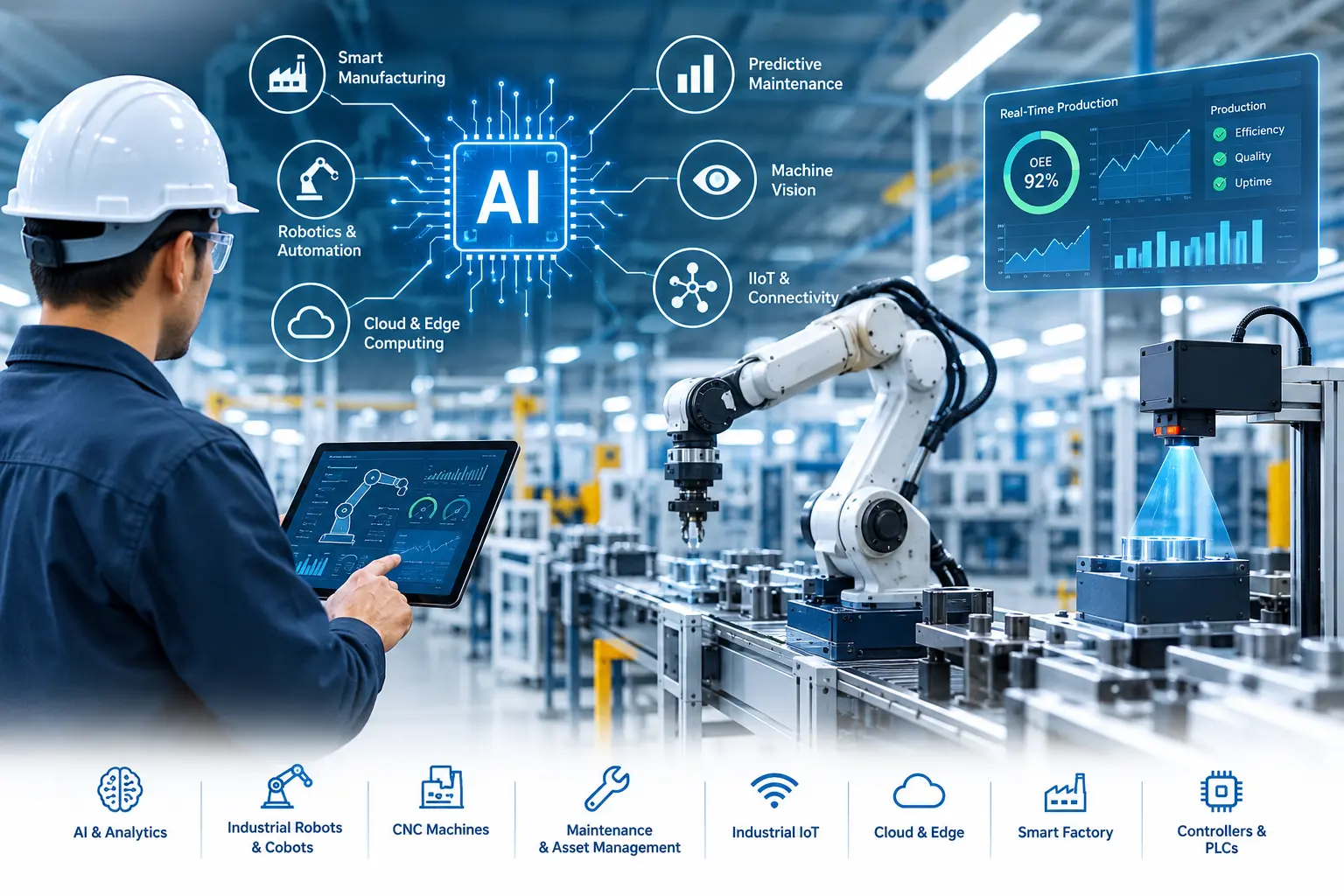
Every automated production line depends on a controller sitting at its core, reading inputs, executing logic, and commanding outputs many times per second, often for years or decades without interruption. For most of automation history, that controller was almost certainly a programmable logic controller, a rugged, purpose built device designed specifically for this exact job. Today, engineers designing a new production line or upgrading an old one have genuinely different options to weigh, including the more powerful programmable automation controller and the increasingly capable industrial PC, each with a different balance of reliability, flexibility, processing power, and cost.
Choosing the wrong controller architecture for a given application can mean years of unnecessary limitation, whether that is a PLC too constrained to handle the data processing a modern smart factory application requires, or an industrial PC too fragile for a harsh, safety critical environment where a programmable logic controller's proven reliability really matters. This guide breaks down exactly how these three controller types differ, where each one genuinely excels, and how to choose the right one for a specific application in a modern factory.
What Is a Programmable Logic Controller?
A programmable logic controller, or PLC, is a ruggedized industrial computer purpose built to reliably execute control logic in real time within a harsh factory environment, handling temperature extremes, vibration, electrical noise, and dust that would quickly damage typical consumer or office computing hardware. PLCs are programmed primarily using ladder logic and other languages defined by the international IEC 61131-3 standard, chosen specifically because they are intuitive for electricians and controls engineers with a background in relay based control systems rather than traditional software development. PLCs excel at deterministic, cyclic scan based execution, meaning they read inputs, execute their program, and update outputs on a predictable, repeating cycle that makes their timing behavior highly reliable and easy to verify, a property that matters enormously for safety critical control applications.
What Is a Programmable Automation Controller?
A programmable automation controller, or PAC, sits conceptually between a traditional PLC and a full industrial PC, combining the ruggedness and deterministic real time execution of a PLC with significantly more processing power, memory, and programming flexibility. PACs typically support a broader range of programming languages beyond the traditional IEC 61131-3 languages, including higher level languages more familiar to software engineers, and are designed to handle more complex applications involving motion control, advanced data processing, and integration with a wider range of communication protocols than a traditional PLC was originally designed to support. Many manufacturers describe PACs as bridging the gap for applications that have outgrown a standard PLC's processing capability but still require the hardened reliability and deterministic timing that a full industrial PC running a general purpose operating system may not guarantee as consistently.
What Is an Industrial PC?
An industrial PC, or IPC, is essentially a ruggedized computer built around standard PC architecture and typically running a general purpose or real time variant of a common operating system, offering the greatest raw processing power, memory, and software flexibility of the three controller types discussed in this guide. Industrial PCs are particularly well suited to applications requiring significant data processing, such as running machine vision algorithms, complex motion control calculations, or edge AI models, tasks that would strain the more limited processing capability of a traditional PLC or even many PACs. The tradeoff is that achieving the same level of guaranteed real time determinism as a purpose built PLC typically requires additional software layers, such as a real time operating system extension or hypervisor running alongside the general purpose operating system, adding complexity that a traditional PLC simply does not need to worry about.
Comparing PLC, PAC, and Industrial PC Across Key Factors
| Factor | PLC | PAC | Industrial PC |
|---|---|---|---|
| Processing Power | Limited, sufficient for standard control logic | Moderate to high | Highest, comparable to standard computing hardware |
| Real Time Determinism | Excellent, natively deterministic | Very good, purpose built for real time control | Good with real time extensions, otherwise variable |
| Programming Languages | IEC 61131-3 languages such as ladder logic | IEC 61131-3 plus higher level languages | General purpose programming languages |
| Ruggedness | Excellent, purpose built for harsh environments | Excellent, purpose built for harsh environments | Good, varies by specific industrial hardware model |
| Data Processing and AI Capability | Limited | Moderate | Excellent, well suited to AI and vision workloads |
| Typical Cost | Lowest | Moderate | Highest, though software licensing varies |
| Best Fit | Standard machine control, simple logic | Complex motion control, mixed workloads | Data intensive applications, AI, vision processing |
Where a Traditional PLC Still Makes the Most Sense
Despite the growing capability of PACs and industrial PCs, a traditional PLC remains the right choice for a large share of factory automation applications, particularly standard machine control tasks such as conveyor sequencing, basic interlocking, and simple discrete manufacturing logic where the processing demands are modest and proven reliability matters more than raw computing power. PLCs also remain the dominant choice for safety related control functions, since their long track record, straightforward deterministic behavior, and widespread familiarity among controls engineers make them easier to validate and certify for safety critical applications compared to newer, more complex controller architectures. For many manufacturers, a standard PLC continues to represent the lowest risk, most cost effective choice for the majority of straightforward control tasks that make up the bulk of a typical facility's automation needs.
Where a PAC Delivers the Best Balance
Programmable automation controllers earn their place in applications that have genuinely outgrown a standard PLC's processing capability but still require the deterministic, hardened reliability that a general purpose industrial PC cannot guarantee as consistently. Complex motion control applications involving multiple coordinated axes, processes requiring more sophisticated data logging and communication with multiple different protocols simultaneously, and applications that benefit from more flexible programming options without sacrificing real time control performance are all strong candidates for a PAC. Many manufacturers view PACs as a practical middle path for facilities modernizing their control architecture without fully committing to the added complexity of managing general purpose computing hardware and operating systems on the factory floor.
Where an Industrial PC Is the Clear Choice
Industrial PCs become the obvious choice whenever an application requires significant computational power that a PLC or PAC simply cannot provide, most notably machine vision processing, edge AI inference for predictive maintenance or quality inspection, and applications requiring integration with modern IT systems and software ecosystems that were not originally designed with industrial control environments in mind. Facilities building out sophisticated connected factory infrastructure, running multiple AI models simultaneously at the edge, or needing to run standard enterprise software directly alongside control functions on the same hardware increasingly find that only an industrial PC offers the processing headroom and software flexibility these applications demand.
The Rise of Soft PLCs Running on Industrial PC Hardware
One of the more significant shifts in recent years has been the growing adoption of soft PLCs, software implementations of traditional PLC control logic that run on industrial PC hardware augmented with a real time operating system extension, effectively combining the deterministic reliability engineers expect from a PLC with the processing power and flexibility of industrial PC hardware. This approach allows a single piece of hardware to simultaneously run traditional deterministic control logic and more demanding data processing or AI workloads, reducing the need to deploy and integrate separate PLC and industrial PC hardware for applications that need both capabilities. While soft PLC adoption is growing steadily, many controls engineers remain cautious about fully replacing dedicated PLC hardware for the most safety critical applications, preferring to reserve this hybrid approach for less critical control functions where the added flexibility clearly outweighs any incremental risk.
A Practical Decision Framework for Choosing a Controller
Selecting the right controller architecture starts with honestly assessing the actual processing and data requirements of the specific application rather than defaulting to whatever controller type a facility has traditionally used. If the application involves straightforward discrete logic, standard sequencing, or safety critical functions where proven reliability and straightforward validation matter most, a traditional PLC remains the sound, lower risk choice. If the application involves more complex motion control, needs to integrate several different communication protocols simultaneously, or requires more processing headroom than a standard PLC comfortably provides without yet needing the full computing power of a general purpose industrial PC, a PAC often represents the best balance of capability and manageable complexity. If the application fundamentally depends on heavy data processing, machine vision, or AI inference, or needs to run software that was never designed for a traditional industrial control environment, an industrial PC, potentially running a soft PLC for any control logic that needs deterministic timing, is typically the only architecture with sufficient capability.
Migration Considerations for Facilities With Legacy Controllers
Manufacturers operating facilities with older PLC installations face an additional set of practical considerations when deciding whether and how to migrate toward more capable controller architectures. Wholesale replacement of a functioning, reliable legacy PLC purely to adopt newer technology rarely makes financial sense on its own, and manufacturers generally get better results by introducing PACs or industrial PCs specifically for new applications that genuinely require their additional capability, while allowing existing, well functioning PLC installations to continue operating undisturbed until they naturally reach end of life or a specific new requirement justifies an upgrade. When migration does become necessary, maintaining compatibility with existing programming standards and communication protocols used elsewhere in the facility helps preserve the institutional knowledge and troubleshooting familiarity that controls engineers and maintenance technicians have already built up over years of working with the facility's existing systems.
Communication Protocols and Networking Differences
The three controller types also differ meaningfully in how they typically communicate with other devices and systems on the factory floor. Traditional PLCs generally support a defined set of industrial communication protocols such as Modbus, EtherNet/IP, and Profinet, chosen specifically for their reliability and determinism in real time industrial environments, though the range of protocols any given PLC supports natively can be somewhat limited compared to more flexible controller types. PACs typically support a broader range of protocols out of the box, including the same industrial standards used by PLCs alongside additional options for integrating with enterprise and IT systems, making them a natural fit for applications that need to bridge traditional operational technology networks with broader information technology infrastructure. Industrial PCs offer the greatest networking flexibility of all three, since their general purpose operating systems can support essentially any communication protocol for which software exists, including modern cloud connectivity standards and web based APIs that would require additional gateway hardware to implement on a traditional PLC or even many PACs.
Total Cost of Ownership Beyond the Initial Hardware Price
Comparing these three controller types purely on upfront hardware cost overlooks several other factors that meaningfully affect total cost of ownership over the life of the equipment. Software licensing costs vary considerably, with many PLC and PAC programming environments sold under a one time license tied to the specific hardware platform, while industrial PCs running general purpose operating systems may carry ongoing licensing costs for the operating system itself alongside any application software. Maintenance and support costs also differ, since PLCs benefit from decades of established maintenance practices and a wide pool of controls engineers familiar with troubleshooting them, while industrial PCs may require IT support skills that traditional plant maintenance staff do not always possess, potentially necessitating additional training or hiring. Finally, the expected service life of the hardware itself varies, with traditional PLCs often remaining in reliable service for fifteen to twenty years or more, while industrial PC hardware, following the faster refresh cycles typical of general computing equipment, may need replacement or significant upgrades on a considerably shorter timeline to keep pace with software and security requirements.
How These Controllers Fit Into a Broader Smart Factory Architecture
None of these controller types operate in isolation in a modern connected factory, and understanding how they fit into the broader technology stack helps clarify why many facilities end up running all three side by side rather than standardizing on a single type. Traditional PLCs and PACs typically sit closest to the physical equipment, handling the deterministic, safety critical control functions that keep machines running safely and predictably. Industrial PCs increasingly sit alongside or just above this control layer, handling the heavier data processing, AI inference, and connectivity functions that feed into a facility's broader unified namespace and analytics infrastructure. In this architecture, the PLC or PAC continues doing what it does best, executing reliable, real time control logic, while the industrial PC handles the data intensive work of turning raw machine signals into the contextualized, AI ready information that feeds predictive maintenance models, quality inspection systems, and production optimization tools elsewhere in the facility. Manufacturers planning a broader smart factory architecture should think of controller selection not as a single facility wide decision, but as a per application choice made within the context of this larger, layered system.
Frequently Asked Questions
Can a PAC completely replace a traditional PLC in a modern factory?
A PAC can handle everything a traditional PLC does and more, but many manufacturers continue to use standard PLCs for simpler control tasks and safety critical functions specifically because of their lower cost and long established track record, reserving PACs for applications that genuinely require their additional processing capability.
Is an industrial PC as reliable as a traditional PLC for continuous factory operation?
Modern industrial PCs built with appropriate ruggedized hardware and paired with a real time operating system extension can achieve reliability approaching that of a traditional PLC, though many controls engineers still prefer dedicated PLC hardware for the most safety critical applications given its longer proven track record in harsh industrial environments.
What is a soft PLC and is it a good option for a new automation project?
A soft PLC is a software based implementation of traditional PLC control logic running on industrial PC hardware, and it can be a strong option for new projects that need both deterministic control and significant data processing capability on the same hardware, though it is generally approached cautiously for the most safety critical control functions.
How does programming complexity differ between these three controller types?
PLCs are generally programmed using straightforward IEC 61131-3 languages such as ladder logic familiar to most controls engineers, while PACs typically support these same languages alongside more advanced options, and industrial PCs often require broader software development skills, particularly when running general purpose programming languages or managing a full operating system alongside control functions.
What skills does a maintenance team need when a facility adds industrial PCs alongside traditional PLCs?
Maintenance teams typically need to develop or bring in some baseline IT competency, including familiarity with operating system updates, network configuration, and general purpose software troubleshooting, since these skills differ meaningfully from the ladder logic and electrical troubleshooting expertise that has traditionally been sufficient for maintaining PLC based control systems.
Does choosing an industrial PC mean giving up the deterministic timing a PLC provides?
Not necessarily, since industrial PCs can achieve strong real time determinism when paired with an appropriate real time operating system extension or hypervisor, though this does add a layer of software complexity that a purpose built PLC does not require to achieve the same deterministic behavior.
Final Thoughts
There is no single best automation controller for every application in a modern factory, and the right choice depends entirely on matching a controller's processing power, real time performance, and cost against the specific demands of the application it will run. Traditional PLCs remain the sound, cost effective choice for standard control and safety critical functions, PACs offer a strong middle path for applications that have outgrown basic PLC capability without needing the full power of general purpose computing, and industrial PCs are increasingly essential wherever heavy data processing, machine vision, or AI inference needs to happen directly at the control level. Manufacturers building out modern, connected factory infrastructure in 2027 will increasingly find themselves running all three controller types side by side, each handling the specific class of application it is genuinely best suited for, and the engineering teams that take the time to make this selection deliberately, application by application, rather than defaulting to a single familiar controller type across the entire facility, will consistently end up with more capable, more cost effective, and easier to maintain automation systems overall.