If you are looking for a simple, safe and completely free way to enjoy movies and series on your cell phone, tablet or TV, Tubi – Free Movies and Series stands out as one of the best options available in 2026. With an impressive collection, a clean interface, and support for Portuguese subtitles, the app offers access to thousands of titles free of charge. And best of all, it's available for direct download from the official stores:

Tubi: Free Movies & Live TV
AI Machine Vision for Manufacturing: Costs, Benefits and Best Systems in 2026
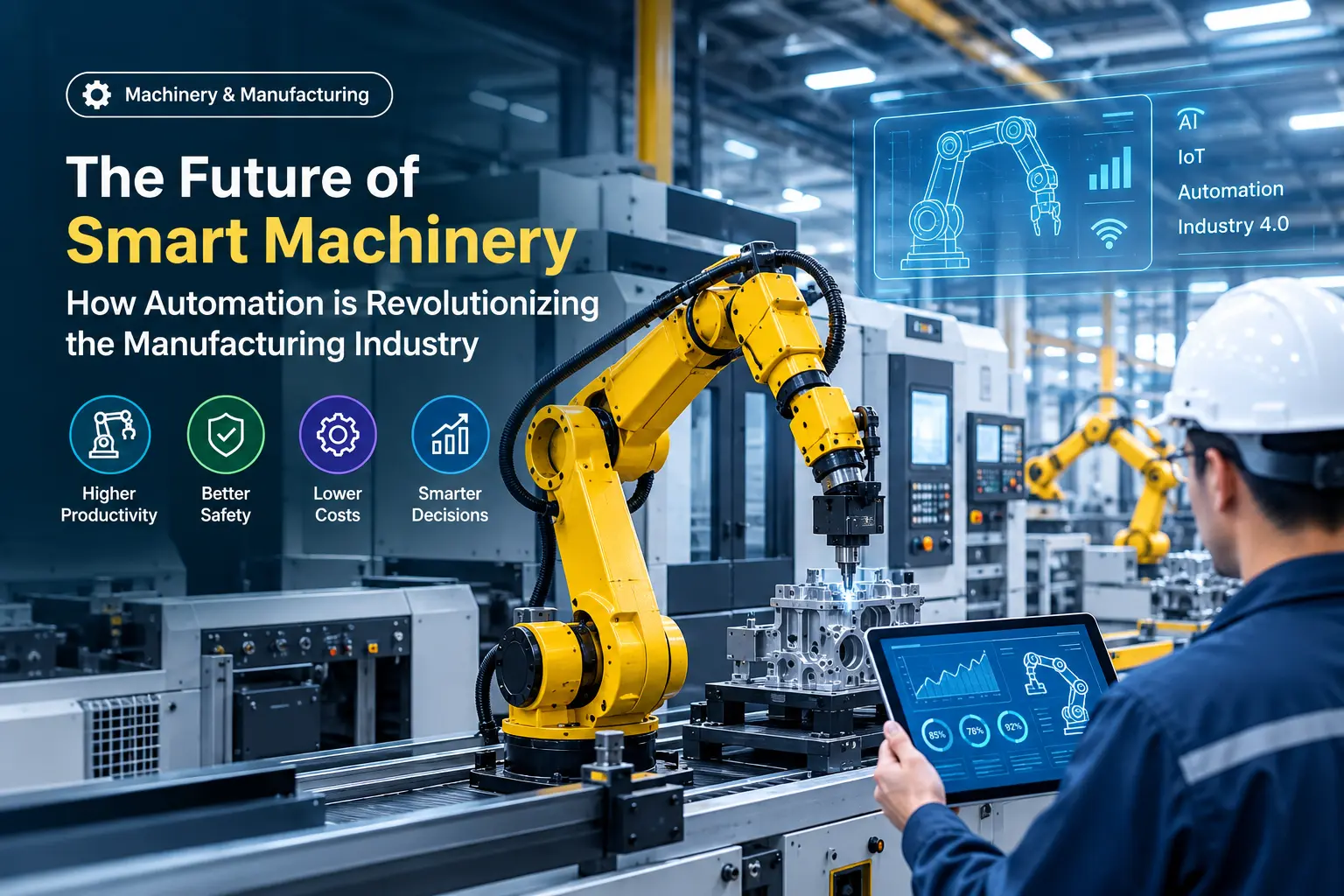
Visual inspection has always been one of the most labor intensive and error prone steps in manufacturing quality control. Human inspectors get tired, blink at the wrong moment, and struggle to maintain consistent judgment across an eight hour shift, especially when inspecting thousands of nearly identical parts for defects that may be smaller than a millimeter. AI machine vision systems are rapidly closing this gap, combining industrial cameras with deep learning models that can inspect parts at production line speed with a level of consistency no human eye can match.
What makes machine vision particularly interesting heading into 2026 is how much the economics have shifted. Camera hardware has become dramatically cheaper, cloud and edge computing options have matured, and pre trained deep learning models have reduced the amount of custom development needed to get a system running on a new production line. That said, machine vision is still a meaningful investment, and manufacturers evaluating this technology need a clear picture of the real costs involved, the benefits that actually move the needle on ROI, and how to choose between the many system types now available on the market.
What Is AI Machine Vision, Exactly?
AI machine vision refers to systems that use one or more industrial cameras, combined with machine learning or deep learning software, to automatically analyze images and make decisions about what they see. This differs from older rule based machine vision, which relied on fixed measurements and simple pattern matching that had to be manually reprogrammed every time a product design changed. Modern AI based vision systems instead learn what a good part looks like from a set of training images, and can generalize that understanding to catch new, previously unseen defect types without needing every possible flaw to be explicitly programmed in advance.
How an AI Machine Vision System Actually Works
A typical deployment starts with one or more industrial cameras positioned to capture a clear, consistent view of the part as it moves along the production line, often paired with specialized lighting designed to highlight the specific defects the system needs to detect, such as surface scratches, dents, or color inconsistencies. The captured images are fed into a deep learning model, either running on a local edge computing device for speed or sent to a cloud based platform for heavier processing, depending on how fast a decision is needed. The model classifies each part as acceptable or defective, often identifying the specific type and location of any flaw, and this result is then sent to the line controller, which can automatically reject the defective part, flag it for human review, or log the data for quality reporting. Over time, new images, including edge cases and previously unseen defect types, can be added to the training set so the model's accuracy continues improving.
Breaking Down the Real Cost of an AI Machine Vision System
Camera and Lighting Hardware
Industrial camera costs vary enormously depending on resolution, frame rate, and whether the application needs standard color imaging, high speed capture, three dimensional depth sensing, or specialized imaging such as infrared or hyperspectral cameras for detecting flaws invisible to the naked eye. Lighting is often underestimated but can meaningfully affect both cost and inspection accuracy, since poor or inconsistent lighting is one of the most common causes of unreliable vision system performance regardless of how good the underlying software is.
Software Licensing
Machine vision software is typically sold either as a one time perpetual license, an annual subscription, or increasingly as a usage based cloud pricing model tied to the number of images processed. Deep learning based platforms with pre trained models and simplified training interfaces tend to cost more upfront than basic rule based vision software, but they generally require far less custom engineering time to deploy.
Integration and Engineering Labor
For most manufacturers, integration labor, including mounting cameras, configuring lighting, connecting the system to existing line controllers, and building the initial training dataset, represents a significant portion of total project cost, often comparable to or exceeding the hardware and software cost combined, particularly for a first time deployment on a complex production line.
Ongoing Maintenance and Model Retraining
Unlike a purely mechanical system, an AI vision system benefits from periodic retraining as new product variants or previously unseen defect types are introduced, and some ongoing budget should be allocated for this rather than treating the initial deployment as a one time expense. Camera lenses and lighting fixtures also require periodic cleaning and calibration checks, since even small amounts of dust or lens drift over time can gradually degrade image quality in ways that are easy to overlook until inspection accuracy starts to slip. Manufacturers that budget for a modest ongoing maintenance program, rather than assuming the system will simply keep performing at its initial installed accuracy indefinitely, consistently report better long term results than those who treat the go live date as the end of the project.
Traditional Automated Optical Inspection vs AI Machine Vision
| Factor | Traditional Rule Based Vision | AI Machine Vision |
|---|---|---|
| Defect Detection Method | Fixed thresholds and pattern matching | Learned patterns from training images |
| Handling New Defect Types | Requires manual reprogramming | Can generalize to previously unseen defects |
| Setup Time for New Products | Often fast for very simple checks | Requires a training dataset, but adapts more easily long term |
| Accuracy on Complex or Variable Parts | Lower, struggles with natural variation | Higher, tolerates natural part to part variation |
| Upfront Cost | Generally lower | Generally higher, though gap is narrowing |
| Improvement Over Time | Static unless manually reprogrammed | Improves as more training data is added |
Where AI Machine Vision Delivers the Strongest ROI
Not every inspection task justifies the added cost of AI based vision over a simpler rule based system, and manufacturers get the best return by targeting applications where variability makes fixed rules impractical. Surface defect detection on products with natural texture variation, such as cast metal parts, textiles, or food products, tends to see dramatic accuracy improvements with AI based systems compared to rule based approaches that struggle to distinguish genuine defects from harmless natural variation. Assembly verification, confirming that every required component is present and correctly oriented on a finished product, is another strong use case, particularly for products with many small components where a missed part could cause a costly field failure. High mix production environments, where the same inspection station needs to handle many different product variants without being reprogrammed for each one, also see especially strong returns from AI vision, since the alternative of manually reconfiguring rule based systems for every product changeover carries a significant hidden labor cost.
Deployment Options: Edge, Cloud, and Hybrid Vision Systems
Manufacturers now have several architectural choices for where the actual image processing happens. Edge based systems run the deep learning model directly on a local device near the camera, offering the lowest latency and the ability to keep functioning even if the plant's network connection goes down, making this the preferred choice for high speed lines where a decision needs to be made in milliseconds. Cloud based systems send images to a remote server for processing, which can support more powerful models and easier centralized management across multiple plants, but introduces network latency that may not be acceptable for the fastest production lines. Hybrid systems run a lightweight model at the edge for immediate pass or fail decisions while also sending images to the cloud for deeper analysis, ongoing model retraining, and centralized quality reporting across a manufacturer's entire operation. The right choice depends heavily on line speed requirements, network reliability at the facility, and whether the manufacturer needs to aggregate quality data across multiple sites.
Types of Machine Vision Systems Available in 2026
The market for machine vision has matured into a few distinct categories, each suited to different needs. Smart cameras combine the camera, processor, and software into a single compact unit, making them a good fit for simpler inspection tasks where a manufacturer wants minimal integration complexity. PC based vision systems separate the camera from a more powerful external processor, offering greater flexibility and processing power for complex, multi camera inspection stations. Fully integrated vision guided robotics platforms combine machine vision directly with robotic arms, allowing the robot to adjust its movement in real time based on the exact position and orientation of parts it sees, which is especially valuable for bin picking and flexible assembly tasks. Finally, cloud native AI vision platforms are increasingly popular for manufacturers running multiple facilities, since they centralize model training and quality data across every plant while pushing lightweight inference models out to edge devices at each individual line.
Choosing the Right System for Your Production Line
Selecting the right machine vision system starts with clearly defining the specific defect types or verification checks the system needs to catch, since this determines the required camera resolution, lighting setup, and whether a deep learning model is genuinely necessary or whether a simpler rule based system would suffice at lower cost. Line speed is another critical factor, since faster lines require either edge based processing or a system specifically designed to keep pace with the required inspection rate without creating a bottleneck. Manufacturers should also consider how much product variety the line handles, since high mix environments benefit far more from AI based systems that can generalize across variants than fixed rule based systems that require reconfiguration for every changeover. Finally, evaluating how easily the chosen platform integrates with existing line controllers, manufacturing execution systems, and quality reporting tools will determine how much of the system's value is actually realized in daily operation versus sitting isolated as a standalone inspection station.
Industry Applications Driving Adoption in 2026
Automotive manufacturing remains one of the largest adopters of AI machine vision, using it for everything from checking weld quality and panel gaps to verifying that every fastener on a finished vehicle has been installed and torqued correctly, a task that would be nearly impossible to guarantee reliably through manual sampling alone. Electronics manufacturing relies heavily on high resolution vision systems to inspect solder joints, component placement, and circuit board surfaces for defects that are often too small for the human eye to catch consistently at production speed. Pharmaceutical and medical device manufacturers use machine vision to verify packaging integrity, label accuracy, and tablet or capsule quality, where regulatory requirements make thorough, well documented inspection a compliance necessity rather than just a quality nice to have. Food and beverage processors are increasingly using AI vision to sort produce by size, color, and ripeness, and to detect foreign material contamination, applications where natural product variation makes traditional rule based systems particularly unreliable.
Measuring the Real Business Impact After Deployment
Once a machine vision system is running in production, tracking the right metrics helps confirm whether the investment is delivering the expected return. Defect escape rate, meaning the percentage of defective units that make it past inspection and reach a customer, is one of the clearest indicators of inspection effectiveness, and a well tuned AI vision system should drive this number down significantly compared to manual sampling based inspection. False rejection rate is equally important to monitor, since a system that is too aggressive in flagging good parts as defective creates unnecessary waste and rework, offsetting some of the quality gains with added cost. Inspection throughput, meaning how many parts the system can process per minute without becoming a line bottleneck, determines whether the system is actually keeping pace with production or quietly limiting overall line speed. Finally, tracking the volume and nature of parts flagged for human review over time can reveal whether the model's accuracy is improving as intended or whether additional training data is needed to address a persistent blind spot.
Common Implementation Mistakes to Avoid
Many machine vision projects underperform not because the underlying AI model is inaccurate, but because of avoidable mistakes during implementation. Underinvesting in lighting is one of the most frequent issues, since even the best deep learning model cannot compensate for inconsistent or poorly designed illumination that changes how defects appear from one part to the next. Starting with too small or unbalanced a training dataset, particularly one that includes very few examples of actual defects compared to good parts, can also limit accuracy, since the model needs a reasonably representative sample of the defect types it will encounter in production. Finally, treating the vision system as a one time installation rather than an ongoing program, without a plan for periodically adding new training images as new defect types or product variants appear, tends to lead to accuracy that plateaus or even degrades over time as the production environment evolves beyond what the original training data covered.
Vendor Landscape: What Categories of Providers Exist
The machine vision market includes several categories of providers, and understanding the differences helps manufacturers navigate vendor conversations more effectively. Established industrial camera and sensor manufacturers offer complete hardware and software ecosystems, often with decades of experience in harsh factory environments and strong support for integration with existing industrial control systems. Software focused AI vision companies specialize in the deep learning platform itself, frequently offering more advanced model training tools and faster time to accuracy, but sometimes requiring the buyer to source cameras and lighting separately or through a partner. Systems integrators, meanwhile, do not manufacture hardware or software themselves but specialize in combining components from multiple vendors into a complete, tested solution tailored to a specific production line, which can be valuable for complex or unusual inspection challenges that a standard off the shelf package does not fully address. Larger manufacturers with vision needs across multiple facilities often work with a combination of these provider types, using a systems integrator to manage the overall deployment while sourcing cameras and AI software from established specialist vendors in each category.
Frequently Asked Questions
How much does an AI machine vision system typically cost to implement?
Costs vary widely depending on the number of cameras, lighting complexity, and integration scope, ranging from a modest investment for a single smart camera inspection station to a substantial project for a multi camera, high speed line with full manufacturing execution system integration.
How long does it take to train an AI vision model for a new product?
Training time depends on how much representative image data is available and how complex the defect types are, but many modern platforms with pre trained base models can reach usable accuracy in a matter of days to a few weeks rather than the months earlier generations of custom built systems often required.
Can AI machine vision replace human quality inspectors entirely?
In most deployments, AI vision handles the repetitive, high speed screening while human inspectors focus on reviewing flagged edge cases and handling more complex judgment calls, meaning the technology typically changes the inspector role rather than eliminating it completely.
What is the difference between two dimensional and three dimensional machine vision?
Two dimensional systems capture a flat image and are well suited to surface defects and simple presence checks, while three dimensional systems capture depth information and are better suited to measuring precise dimensions, detecting warping, or guiding robots that need to understand a part's exact position in space.
Do I need a data science team to run an AI machine vision system?
Most current commercial platforms are designed with user friendly training interfaces that allow quality engineers and line technicians to label images and retrain models without deep machine learning expertise, though very custom or highly complex applications may still benefit from specialized support during initial setup.
Looking Ahead: Where Machine Vision Is Headed Next
Several developments are likely to reshape machine vision economics and capability further over the next few years. Multimodal AI models that combine image data with other sensor inputs, such as thermal readings or acoustic signals, are beginning to enable inspection systems that catch defect types no single sensor could detect on its own, particularly for hidden internal flaws that are invisible to a camera alone. Synthetic training data generation, where realistic defect images are generated artificially rather than collected from real production runs, is also reducing one of the biggest historical bottlenecks in deploying AI vision for rare defect types that might otherwise take months of production to accumulate enough real world examples. Finally, as edge computing hardware continues to improve in both performance and affordability, more manufacturers will be able to run sophisticated deep learning models directly at the point of inspection without depending on cloud connectivity, making high accuracy AI vision increasingly practical even for smaller facilities or remote plants with limited network infrastructure.
Final Thoughts
AI machine vision has moved from an experimental technology to a practical, increasingly essential tool for manufacturers serious about improving quality while controlling labor costs. The combination of falling hardware prices, more accessible deep learning software, and flexible edge, cloud, and hybrid deployment options means the barrier to entry is lower in 2026 than it has ever been. Manufacturers who take the time to match the right system type and deployment approach to their specific inspection challenge, rather than defaulting to the most expensive or most hyped option, will see the strongest and fastest return on their investment.