If you are looking for a simple, safe and completely free way to enjoy movies and series on your cell phone, tablet or TV, Tubi – Free Movies and Series stands out as one of the best options available in 2026. With an impressive collection, a clean interface, and support for Portuguese subtitles, the app offers access to thousands of titles free of charge. And best of all, it's available for direct download from the official stores:

Tubi: Free Movies & Live TV
Best CNC Machines for Small Manufacturing Businesses in 2026
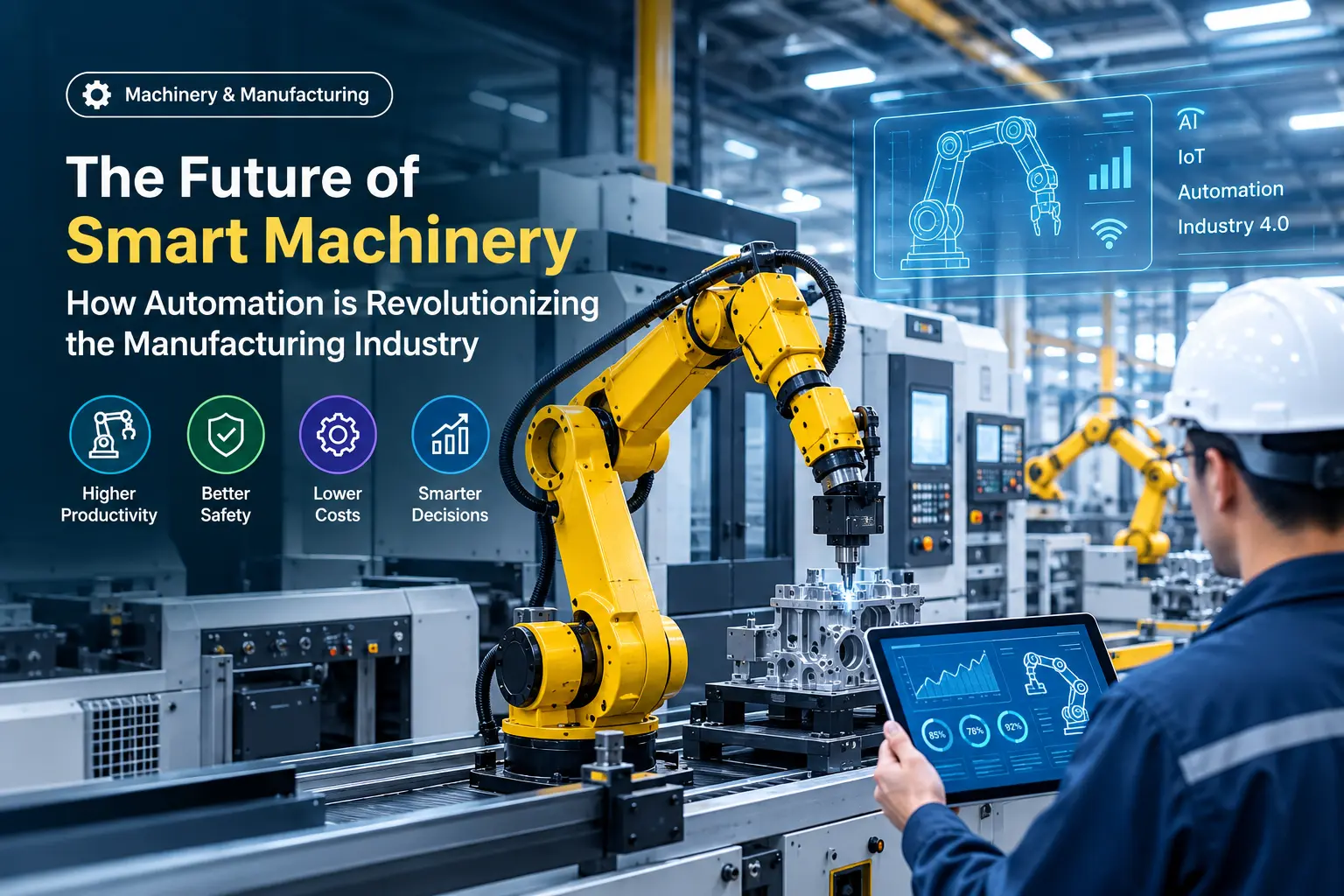
Buying a first CNC machine is one of the biggest decisions a small manufacturing business makes, since it typically represents a significant portion of available capital and directly determines what kind of work the shop can realistically take on for years afterward. Unlike a large manufacturer that can dedicate a fleet of specialized machines to narrow, high volume applications, a small shop usually needs a single machine, or a very small number of them, to handle a genuinely varied mix of jobs, making the initial machine selection decision considerably higher stakes than it would be for a larger operation simply adding incremental capacity.
Fortunately, 2026 offers small manufacturers considerably more accessible options than were available even a few years ago, with falling machine costs, simplified control software, and flexible financing all lowering the barrier to entry into CNC manufacturing. This guide walks through the CNC machine types best suited to small manufacturing businesses, what actually matters when evaluating a first purchase, realistic budget expectations, and a practical path to choosing the right machine for a specific shop's actual work.
Why 2026 Is a Good Time for Small Manufacturers to Invest in CNC
Several trends have converged to make CNC machine ownership considerably more accessible to small manufacturers than in previous years. Machine costs across most categories have continued to decline as manufacturing competition has increased and production efficiency has improved among machine builders themselves. Control software has become considerably more intuitive, with many current machines offering simplified conversational programming or tight integration with widely used, more accessible CAM software packages, reducing the specialized programming expertise a small shop needs on staff from day one. Growing interest in domestic, small batch, and reshored manufacturing has also increased demand for the kind of flexible, quick turnaround production that small CNC shops are particularly well positioned to provide, strengthening the business case for smaller manufacturers to invest in their own in house machining capability rather than relying entirely on outside contract manufacturers.
CNC Machine Types Best Suited to Small Manufacturing Businesses
Benchtop and Desktop CNC Mills
Compact benchtop CNC mills offer the lowest cost and smallest footprint entry point into CNC machining, well suited to prototyping, small parts, and softer materials such as plastics and lighter metals. While generally more limited in rigidity, spindle power, and achievable tolerance compared to larger industrial machines, benchtop mills allow a small shop or even an individual entrepreneur to begin producing real parts and building CNC experience with a considerably smaller upfront investment than a full sized machine would require.
Compact Vertical Machining Centers
Scaled down versions of full industrial vertical machining centers, compact VMCs offer meaningfully more rigidity, spindle power, and precision than benchtop mills while still fitting within the tighter floor space and budget constraints typical of a small shop. This category represents the most common serious first machine investment for small manufacturers intending to produce production quality metal parts rather than only prototypes or softer material work.
CNC Routers
Optimized primarily for wood, plastics, composites, and softer non ferrous metals, CNC routers typically offer a larger working area relative to their cost compared to a milling machine, making them well suited to small manufacturers producing signage, furniture components, panels, and similar larger format but less structurally demanding parts.
CNC Lathes
For small manufacturers whose work centers on round, turned parts such as shafts, bushings, and fittings, a CNC lathe is typically a more appropriate and cost effective investment than a milling machine, which is not well suited to efficiently producing cylindrical geometry compared to a dedicated turning machine.
Entry Level Multi-Axis Machines
A growing number of manufacturers now offer more accessible, entry level 4-axis and 5-axis machines specifically scaled and priced for smaller shops, allowing manufacturers with a genuine need for complex multi sided geometry to access this capability without the considerably higher cost of a full industrial scale multi axis machining center.
What Actually Matters When Choosing a First CNC Machine
Footprint and Power Requirements
Small manufacturers should confirm not just that a machine physically fits their available floor space, but that their facility's electrical service can actually support the machine's power requirements, since larger machines often require higher voltage service or dedicated circuits that may necessitate additional electrical work beyond the machine purchase itself.
Ease of Use and Control Software
Without a dedicated, highly experienced machinist on staff, a small shop benefits considerably from a machine offering intuitive control software, whether through simplified conversational programming or strong compatibility with accessible, widely used CAM software packages that existing or new staff can learn without extensive specialized training.
Tooling and Consumable Costs
Beyond the machine price itself, ongoing costs for cutting tools, workholding, and other consumables vary considerably by machine type and the materials a shop plans to work with, and should be factored into the total cost comparison between different machine options rather than evaluated purely on the base machine price.
Local Support and Service Network
A machine with an established local dealer or service network able to provide timely repairs and technical support offers meaningful peace of mind for a small shop that cannot afford extended downtime while waiting for support from a distant or unresponsive vendor, making this a genuinely important evaluation factor alongside the machine's technical specifications.
Upgrade Path and Resale Value
Small manufacturers should consider how a specific machine and brand tend to hold their value on the used equipment market, since a machine with strong resale value offers more flexibility to upgrade to a different or larger machine later as the business grows, compared to a machine that depreciates rapidly and offers little residual value if the shop's needs eventually outgrow it.
Comparing CNC Machine Types for Small Manufacturers
| Machine Type | Best Suited For | Typical Investment Level |
|---|---|---|
| Benchtop CNC Mill | Prototyping, small parts, plastics and soft metals | Lowest |
| Compact Vertical Machining Center | Production quality metal parts, general job shop work | Moderate |
| CNC Router | Wood, plastics, composites, larger format panels | Low to moderate |
| CNC Lathe | Round, turned parts such as shafts and fittings | Moderate |
| Entry Level Multi-Axis Machine | Complex geometry requiring multi sided access | Higher |
Setting a Realistic Budget
Small manufacturers should build a complete budget that goes well beyond the base machine price, including workholding and fixturing, an initial set of cutting tools appropriate to the materials they plan to work with, any necessary CAM software licensing, and the electrical or facility modifications needed to properly install and power the machine. Manufacturers should also set aside a reasonable contingency for training time, whether through formal courses, manufacturer provided training included with the purchase, or the simple productivity loss that comes with staff building proficiency on new equipment during the machine's first several weeks or months in operation. Building this complete budget picture before finalizing a specific machine choice helps avoid the common experience of a shop discovering significant additional costs only after the base machine purchase has already been committed to.
Financing Options for Small Manufacturers
Small manufacturers have several practical paths to financing a CNC machine purchase beyond a single large capital outlay. Equipment loans specifically structured around machine tool purchases are widely available and often allow the machine itself to serve as collateral, potentially offering more favorable terms than a general small business loan. Equipment leasing spreads the cost into predictable monthly payments, preserving working capital, and some leasing arrangements are structured to eventually transfer ownership to the manufacturer at the end of the lease term. Government and regional small manufacturer grant and loan programs, particularly those supporting domestic manufacturing capacity or specific industry sectors, are also worth researching, since the availability and terms of these programs vary considerably by region and can meaningfully offset the cost of a first significant equipment purchase.
A Realistic First Project and ROI Approach
Small manufacturers should approach their first CNC machine investment with a specific, well understood initial application in mind rather than purchasing capacity speculatively and figuring out how to use it afterward. Identifying a clear first project, ideally one already generating revenue through an existing customer relationship or a well validated product idea, gives the new machine an immediate, concrete purpose and allows the shop to build genuine operational experience and confidence before expanding into more varied or speculative work. Manufacturers should track actual machine utilization and profitability on this initial application closely, using that real data to inform decisions about whether and how to expand into additional applications or eventually invest in a second machine, rather than assuming success on paper will automatically translate into the shop's actual day to day experience.
Industry Examples of Small Manufacturers Choosing the Right CNC Machine
A small custom furniture and cabinetry business primarily working with wood and plastic laminate panels typically finds a CNC router the natural first investment, since its larger working area and material specific optimization fit that business far better than a metal cutting mill ever would, even though a mill might seem like the more generically capable machine on paper. A small precision parts supplier producing shafts, bushings, and other cylindrical components for local industrial customers generally sees the strongest return from investing in a CNC lathe rather than a milling machine, since attempting to produce genuinely round, turned geometry efficiently on a mill would require far more setup complexity and machining time than a dedicated lathe designed specifically for that geometry. A small prototyping and product development studio serving inventors and small companies developing new products often finds a benchtop mill sufficient for its actual needs, since the parts produced are typically low volume proof of concept pieces rather than production quality components requiring the rigidity and precision of a larger, more expensive machine. A small aerospace subcontractor beginning to receive requests for complex bracket geometry with features on multiple sides might reasonably justify the higher investment in an entry level multi axis machine specifically to capture that more complex, higher margin work that its existing simpler equipment genuinely cannot produce efficiently or accurately enough to compete for.
Evaluating Machine Brands and Vendors for a Small Shop
Beyond the specific machine type and configuration, small manufacturers should carefully evaluate the vendor and brand behind any serious CNC investment, since long term reliability and support often matter as much as the initial purchase price for a shop that cannot easily absorb extended downtime. Manufacturers should ask prospective vendors directly about typical response times for service calls and parts availability in their specific region, since a machine from an otherwise excellent manufacturer can become a significant liability if local support is slow or difficult to access when something eventually needs repair. Requesting references from other small manufacturers who have owned the same machine model for several years, rather than relying solely on the vendor's own marketing materials or newer customer testimonials, provides considerably more reliable insight into a machine's genuine long term reliability and the vendor's actual ongoing support quality. Small manufacturers should also consider whether a specific brand has a strong enough regional presence that used equipment, spare parts, and experienced operators familiar with that machine will likely remain readily available for years into the future, since this affects both the machine's practical long term usability and its eventual resale value if the shop's needs change.
Common Mistakes Small Manufacturers Make With Their First CNC Machine
A number of avoidable mistakes tend to undermine a small manufacturer's first CNC investment. Purchasing more machine capability than the shop's actual and realistically anticipated work requires, chasing impressive specifications rather than matching the machine to genuine business needs, often results in unnecessary cost and complexity without a corresponding practical benefit. Underestimating the true total cost by focusing only on the base machine price while overlooking tooling, software, and facility modification costs frequently leads to budget overruns partway through a project. Finally, failing to plan for the genuine learning curve involved in becoming proficient with a new machine and its control software, expecting immediate full productivity from day one, often leads to frustration and unrealistic expectations during the machine's critical early operating period.
Frequently Asked Questions
Should a small manufacturer start with a benchtop mill or a full sized machining center?
This depends heavily on the intended application and available budget, with benchtop mills offering a lower cost entry point well suited to prototyping and lighter work, while a compact vertical machining center is generally the better choice for a shop planning to produce genuine production quality metal parts from the start.
How much floor space does a typical small shop CNC machine require?
Requirements vary considerably by machine type and size, with benchtop mills fitting on a sturdy workbench in a modest space, while compact vertical machining centers and CNC routers generally require a dedicated floor footprint along with adequate clearance for material handling and maintenance access around the machine.
What ongoing costs should a small manufacturer expect beyond the machine purchase itself?
Ongoing costs typically include cutting tool replacement, coolant and other consumables, periodic maintenance, and any CAM software subscription or update fees, all of which should be factored into a shop's ongoing operating budget rather than treated as a one time expense limited to the initial purchase.
Is it better to buy a new or used CNC machine for a first purchase?
A used machine can meaningfully reduce upfront cost, but manufacturers should weigh this against reduced or absent warranty coverage and the risk of inheriting maintenance issues from the machine's prior use, making a thorough inspection and, where possible, verified maintenance history particularly important when considering a used purchase for a shop's first significant equipment investment.
How long does it typically take a small shop to become fully productive on a new CNC machine?
This varies based on staff experience and the specific machine's complexity, but small manufacturers should generally expect a ramp up period of several weeks to a few months before reaching full expected productivity, and should factor this realistic timeline into their initial ROI and cash flow planning rather than assuming immediate full efficiency from day one.
Should a small manufacturer hire an experienced machinist or train existing staff on a new CNC machine?
Both approaches can work, with hiring an experienced machinist typically shortening the initial ramp up period considerably at the cost of additional payroll expense, while training existing staff preserves institutional knowledge and loyalty at the cost of a generally longer learning curve before the shop reaches full expected productivity on the new equipment.
What is the most common reason small manufacturers regret their first CNC machine purchase?
Purchasing a machine sized or configured for anticipated future work that never materializes, rather than matching the initial purchase to the shop's actual current and near term validated business, is one of the most commonly cited sources of regret, since this typically results in either an underutilized, overly expensive machine or one that requires costly workarounds for the shop's real day to day production needs.
Final Thoughts
Choosing the right first CNC machine is one of the most consequential decisions a small manufacturing business makes, and getting it right depends on honestly matching machine type and capability to the shop's actual and realistically anticipated work, rather than defaulting to the most impressive specifications a budget can technically stretch to cover. Small manufacturers who build a complete cost picture beyond the base machine price, choose financing that fits their cash flow situation, and start with a clear, well validated first application consistently achieve a smoother path to profitability than those who purchase capacity speculatively without a concrete plan for how it will actually be used from day one.