If you are looking for a simple, safe and completely free way to enjoy movies and series on your cell phone, tablet or TV, Tubi – Free Movies and Series stands out as one of the best options available in 2026. With an impressive collection, a clean interface, and support for Portuguese subtitles, the app offers access to thousands of titles free of charge. And best of all, it's available for direct download from the official stores:

Tubi: Free Movies & Live TV
Humanoid Robots vs Industrial Robots: Which Technology Has the Better ROI?
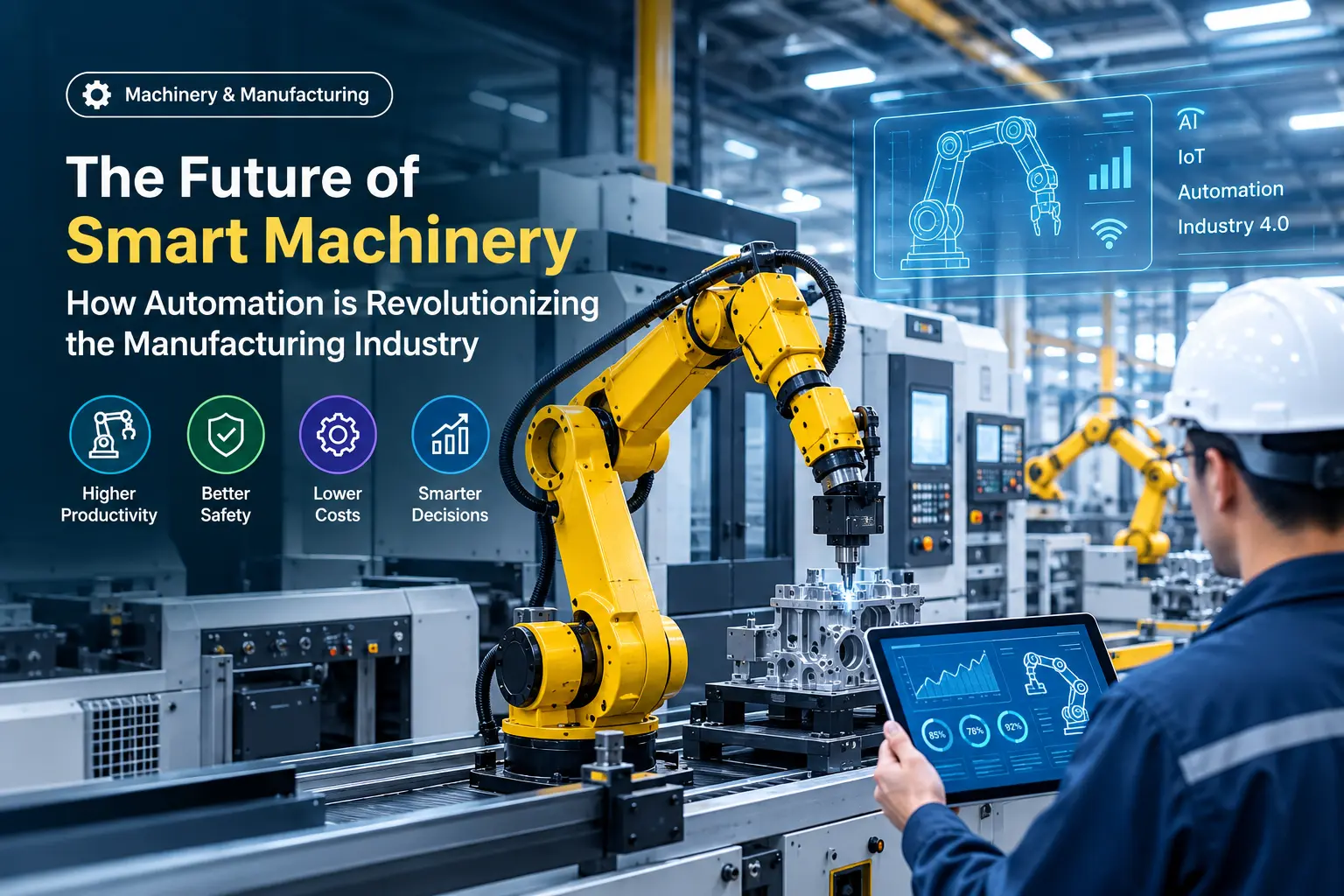
Humanoid robots have captured an unusual amount of manufacturing industry attention recently, with a growing number of companies demonstrating bipedal or wheeled human shaped robots performing tasks like walking through a warehouse, picking up boxes, and even attempting simple assembly work. For manufacturing leaders evaluating where to actually spend capital, the interesting question is not whether this technology is impressive, but whether it delivers a better return on investment than the traditional industrial robots that have automated factory floors for decades. The honest answer, as of 2026, depends heavily on the specific task, and understanding the real mechanics of how ROI works differently for these two robot categories is essential before committing budget to either one.
This guide compares humanoid robots and traditional industrial robots specifically on the economics that actually determine return on investment, rather than simply describing what each technology can do. It covers where traditional industrial robots remain the clear financial winner today, where humanoid robots could eventually change that calculation, and how manufacturers should think about this decision realistically rather than being swept up in either dismissive skepticism or uncritical hype.
Defining the Two Categories Clearly
A traditional industrial robot is a purpose built machine, typically a fixed robotic arm, engineered and optimized for a specific type of task such as welding, palletizing, or pick and place operations, often achieving extraordinary speed and precision within that narrow scope but requiring significant reprogramming or physical reconfiguration to handle a fundamentally different task. A humanoid robot is a general purpose machine, built with a human like form factor including some combination of a torso, arms, and either legs or a mobile base, specifically designed to operate within spaces, tools, and workflows originally built for human workers, without requiring the facility itself to be redesigned around the robot's specific physical requirements. This human compatible form factor is the core value proposition of humanoid robots, since it theoretically allows a single robot design to eventually perform many different tasks across a facility that would otherwise each require a separate, purpose built traditional automation solution.
Why Humanoid Robots Are Getting So Much Attention Right Now
The renewed interest in humanoid robots is driven less by the human shape itself and more by recent advances in the underlying artificial intelligence that controls how these robots perceive and act in the world, often referred to as physical AI. Earlier generations of humanoid robotics struggled primarily with basic mobility and balance, while current systems increasingly focus on the more commercially relevant challenge of dexterous manipulation and task generalization, using techniques such as simulation based training and large scale motion data to teach a single robot design a broad and growing set of physical skills. Persistent manufacturing labor shortages have also increased interest in any technology promising to fill gaps in tasks that are difficult to staff, and a general purpose robot capable of stepping into many different roles as needed is naturally appealing to manufacturers facing chronic staffing challenges across multiple different positions.
How ROI Actually Works Differently for Each Category
The fundamental economics behind these two robot categories differ in an important way that shapes how ROI should actually be calculated for each. A traditional industrial robot earns its return by performing one specific, well defined task an enormous number of times, spreading its upfront cost and integration effort across a very high volume of repetitions, which is exactly why traditional robots deliver such strong ROI in high volume, stable production environments. A humanoid robot, by contrast, is designed to justify its cost by performing many different tasks across a facility, potentially switching between machine tending, material transport, and simple assembly work throughout a single shift, meaning its ROI case depends on aggregating value across a variety of lower volume tasks that would each individually be too small to justify a dedicated traditional automation solution. This means comparing the two technologies on a simple, single task payback calculation misses the actual economic logic each one is built around.
Comparing Humanoid Robots and Traditional Industrial Robots
| Factor | Traditional Industrial Robots | Humanoid Robots |
|---|---|---|
| Speed on a Single Task | Very high, purpose optimized | Generally slower, still maturing |
| Precision and Repeatability | Extremely high, proven over decades | Improving but generally less precise currently |
| Versatility Across Tasks | Low, requires reprogramming or rework | High, designed to generalize across tasks |
| Facility Redesign Required | Often significant, purpose built work cells | Minimal, designed for human built spaces |
| Technology Maturity | Extremely mature, decades of deployment | Early stage, rapidly evolving |
| Current Cost per Unit | Well established and predictable | Higher and less predictable currently |
| Best ROI Scenario Today | High volume, single well defined task | Not yet clearly proven at scale |
Where Traditional Industrial Robots Still Deliver Clearly Superior ROI
For virtually any high volume, well defined manufacturing task in 2026, a traditional industrial robot remains the financially sound choice, and this is unlikely to change quickly. Automotive body welding, high speed packaging, and heavy palletizing all depend on speed, precision, and proven long term reliability that current humanoid robots simply cannot match, and the decades of accumulated engineering refinement behind traditional industrial robotics represent a very difficult gap for a fundamentally newer technology to close quickly. Manufacturers running stable, high volume production of a well defined product should continue confidently investing in traditional industrial robotics for these core tasks, since the ROI case is well established, predictable, and does not carry the technology risk currently associated with early stage humanoid platforms.
Where Humanoid Robots Could Eventually Change the Calculation
The scenarios where humanoid robots could plausibly deliver superior ROI compared to traditional automation share a common thread: situations where the cost and inflexibility of purpose built automation currently make traditional robotics uneconomical, even though the underlying task itself would clearly benefit from automation. Facilities with highly varied, lower volume production, where no single task occurs frequently enough to justify a dedicated traditional robotic cell, represent a plausible long term opportunity for a general purpose robot that can shift between several different tasks throughout a shift. Older facilities not originally designed with robotics in mind, where retrofitting fixed automation would require extensive and costly redesign of existing workflows and layouts, could also see genuine value from a robot specifically designed to operate within spaces built for human workers without requiring that same disruptive redesign. Tasks requiring mobility across a large facility combined with some degree of manipulation, such as retrieving tools or materials from various locations and delivering them to different workstations, represent another category where a single mobile, human scale robot could plausibly replace what would otherwise require several separate, purpose built automation systems.
Being Honest About Current Limitations
Manufacturers evaluating humanoid robots in 2026 should approach vendor claims with appropriate skepticism, since the technology remains genuinely early stage despite significant recent progress and investment. Current humanoid platforms generally still lag well behind traditional industrial robots on speed, precision, and proven long term reliability in continuous production environments, meaning claims of humanoid robots matching or exceeding traditional automation performance across a broad range of tasks should be treated cautiously until demonstrated convincingly in a manufacturer's own real production conditions rather than a controlled demonstration. Cost per unit for humanoid robots also remains considerably higher and less predictable than the well established pricing of mature traditional industrial robotics, reflecting both the technology's earlier stage of development and the lower production volumes current humanoid manufacturers are operating at compared to decades old traditional robotics supply chains.
A Practical Framework for Deciding Whether to Invest Now
Manufacturers considering an early humanoid robot investment should apply a different evaluation standard than they would for a mature traditional automation purchase, treating it more like an early stage technology pilot than a guaranteed ROI decision. The first question worth asking is whether the specific tasks under consideration are genuinely difficult or uneconomical to automate with existing, mature traditional robotics or simpler automation, since if a traditional solution already delivers strong ROI for the task in question, there is little reason to take on the additional risk of an early stage humanoid platform instead. The second question is how much value the manufacturer would gain specifically from the humanoid form factor's ability to operate across multiple different tasks without facility redesign, since this versatility is the core differentiator humanoid robots offer over traditional automation, and its value should be weighed honestly against the current cost and performance limitations still present in the technology. Manufacturers genuinely interested in this space should consider a small, well contained pilot specifically framed as a learning exercise, with modest expectations about immediate ROI, rather than committing to a broad deployment based on vendor projections that have not yet been proven in a real, sustained production environment.
The Role of Continued Technology Maturation
The ROI calculation for humanoid robots is likely to shift meaningfully over the next several years as the underlying technology continues to mature, and manufacturers should view today's comparison as a snapshot rather than a permanent verdict. Continued advances in the physical AI models controlling humanoid manipulation and mobility, combined with manufacturing scale efficiencies as more companies enter the humanoid robotics market, are likely to gradually improve both the performance and cost profile of these systems. Manufacturers should monitor this space actively even if they are not ready to invest today, since the specific point at which humanoid robots become genuinely competitive with traditional automation for a broader range of tasks is likely to arrive gradually and unevenly across different task types, rewarding manufacturers who have already built some internal familiarity with the technology through earlier, smaller pilots over those encountering it for the first time once it has already matured considerably. Tracking independent, third party evaluations and case studies from manufacturers in comparable industries, rather than relying solely on vendor marketing materials, is one of the more reliable ways to gauge how quickly this technology is genuinely progressing toward broader commercial viability.
Calculating a More Complete ROI Model for Each Technology
Building a genuinely useful ROI comparison between these two categories requires modeling more than just the purchase price and expected labor savings for a single task. For a traditional industrial robot, the full model should include the robot itself, any required safety fencing and integration labor, ongoing maintenance costs, and the expected service life over which that investment will be repaid through the specific task it performs, a calculation that manufacturers have refined over decades and can generally estimate with reasonable confidence. For a humanoid robot, a complete model needs to account not only for the higher current hardware cost, but for the value generated across every task the robot is expected to perform throughout a shift, the productivity lost during the current technology's slower task switching and setup between different activities, and a realistic estimate of downtime or performance shortfalls given the technology's earlier stage of maturity. Manufacturers attempting this calculation should build conservative estimates for humanoid robot uptime and task switching efficiency specifically, since vendor projections in an emerging technology category often reflect best case performance rather than the more variable results typical of real, sustained production use.
How Facility Type Changes Which Technology Makes More Sense
The relative attractiveness of humanoid robots versus traditional industrial robots also depends heavily on the specific type of facility under consideration. A high volume, single product manufacturing plant with a stable, well defined process is exactly the environment where traditional industrial robotics has always delivered its strongest returns, and little about the current state of humanoid technology changes that calculation. A contract manufacturer or job shop producing a wide variety of products in smaller batches, where no single task occurs frequently enough to justify dedicated traditional automation, represents a much more interesting environment to watch for humanoid robot adoption, since this is precisely the kind of production variability that a general purpose, easily redeployed robot is theoretically well suited to address. Warehouse and distribution environments, which often involve varied material handling and simple manipulation tasks across a large physical space, are also frequently cited as an early proving ground for humanoid robots, since these environments combine the mobility and task variety that play to a humanoid platform's theoretical strengths while generally avoiding the extreme speed and precision demands of the most demanding manufacturing applications.
Frequently Asked Questions
Are humanoid robots currently a better investment than traditional industrial robots?
For the vast majority of well defined, high volume manufacturing tasks in 2026, traditional industrial robots remain the clearly superior investment due to their proven speed, precision, and reliability, with humanoid robots currently better suited to limited, well scoped pilot projects rather than broad production deployment.
What manufacturing scenario would most favor a humanoid robot over traditional automation?
Facilities with highly varied, lower volume production, or older facilities where retrofitting fixed automation would require extensive costly redesign, represent the scenarios where a general purpose humanoid robot's versatility could plausibly deliver better value than investing in several separate, purpose built traditional automation systems.
How should a manufacturer evaluate a humanoid robot vendor's ROI claims?
Manufacturers should request evidence from a structured pilot using their own actual tasks and production conditions rather than relying on a vendor's controlled demonstration, since current humanoid robot performance can vary considerably between an impressive demonstration environment and the more variable, sustained conditions of real production.
Will humanoid robots eventually replace traditional industrial robots?
Most industry observers expect the two categories to serve different purposes rather than one replacing the other, with traditional industrial robots continuing to dominate high volume, well defined tasks while humanoid robots find their niche in more varied, lower volume applications where versatility matters more than raw speed and precision.
How should a manufacturer budget for risk when piloting a humanoid robot?
Manufacturers should treat an early humanoid robot pilot budget more like an exploratory research and development expense than a guaranteed return investment, setting aside funds specifically for the likelihood of slower than expected performance, additional integration effort, and the possibility that the pilot may not yet justify a broader rollout given the technology's current stage of maturity.
What internal capabilities should a manufacturer build before piloting a humanoid robot?
Manufacturers considering an early humanoid robot pilot benefit from having strong existing data and connectivity infrastructure already in place, along with staff comfortable working alongside adaptive, less predictable automation than traditional fixed robotics, since both of these foundations make it considerably easier to evaluate and act on the results of an early stage pilot.
Is it too early for manufacturers to consider any humanoid robot investment at all?
Not necessarily, since manufacturers with genuine curiosity about the technology can benefit from a small, well contained pilot treated as a learning exercise with modest ROI expectations, though committing significant capital to broad humanoid robot deployment based purely on vendor projections remains premature for most manufacturing applications today.
Final Thoughts
Comparing humanoid robots and traditional industrial robots purely on which one is better misses the more useful question of which one fits a specific task and situation, since the two categories are built around fundamentally different economic logic. Traditional industrial robots remain the clear, proven choice for high volume, well defined production tasks in 2026, while humanoid robots represent a genuinely promising but still early stage technology whose strongest potential lies in versatility across varied, lower volume tasks rather than displacing mature automation anywhere it already delivers strong, established returns. Manufacturers who evaluate this decision honestly, based on their specific task requirements and a realistic view of current technology maturity rather than either dismissive skepticism or uncritical hype, will make the soundest capital allocation decisions as this technology continues to evolve.