If you are looking for a simple, safe and completely free way to enjoy movies and series on your cell phone, tablet or TV, Tubi – Free Movies and Series stands out as one of the best options available in 2026. With an impressive collection, a clean interface, and support for Portuguese subtitles, the app offers access to thousands of titles free of charge. And best of all, it's available for direct download from the official stores:

Tubi: Free Movies & Live TV
Industrial AI Platforms: What Manufacturers Should Look for Before Investing in 2027
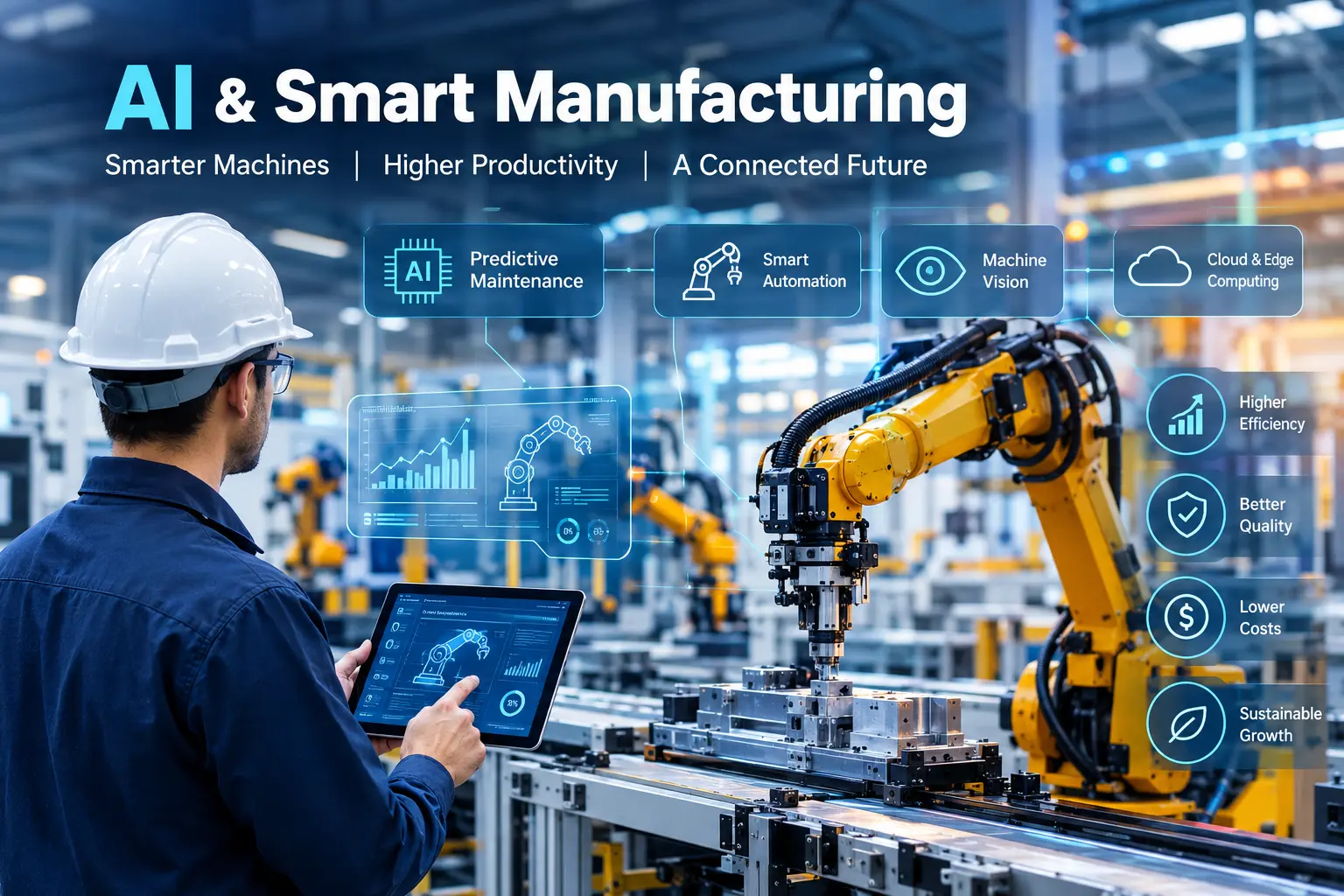
The market for industrial AI platforms has grown crowded very quickly, with vendors ranging from established industrial automation giants adding AI modules to their existing product lines, to venture backed startups built entirely around a single AI use case, to large cloud providers offering general purpose AI infrastructure that manufacturers are expected to customize themselves. For a plant manager or operations leader trying to make a sound investment decision in 2027, this crowded landscape makes it genuinely difficult to separate a platform that will deliver real, lasting value from one that will become an expensive, underused dashboard within eighteen months.
Unlike a single point solution such as a predictive maintenance sensor kit or a vision inspection camera, an industrial AI platform is typically meant to serve as a broader foundation, connecting data across multiple machines, processes, and sometimes multiple facilities, and supporting several different AI use cases over time rather than just one. That broader scope makes the stakes of the buying decision higher, since switching platforms after a large scale rollout is far more disruptive than replacing a single inspection camera. This guide walks through exactly what manufacturers should evaluate before committing budget to an industrial AI platform in 2027, from architecture and integration to security, total cost of ownership, and the contractual red flags that often get overlooked during the sales process.
What Exactly Is an Industrial AI Platform?
An industrial AI platform is a software layer designed to ingest data from manufacturing equipment and systems, apply machine learning or other AI techniques to that data, and deliver insights or automated actions back to the people and systems running the plant. This is distinct from a narrow point solution built for a single task, such as a standalone vision inspection camera or a single predictive maintenance sensor kit, because a platform is meant to be a reusable foundation that can support multiple use cases, such as predictive maintenance, quality inspection, energy optimization, and production scheduling, all built on top of the same underlying data infrastructure rather than requiring a completely separate system for each new AI application a manufacturer wants to pursue.
Platform Architecture: Cloud, Edge, and Hybrid Models
One of the first and most consequential decisions in evaluating an industrial AI platform is understanding where the actual data processing and model execution will happen. Cloud centric platforms process most data in a remote data center, offering strong centralized analytics and easier management across multiple facilities, but introducing network dependency and latency that may not be acceptable for time sensitive applications such as real time process control. Edge centric platforms push processing down to devices located on or near the factory floor, minimizing latency and maintaining functionality even during network outages, but often requiring more local hardware investment and more complex device management across a large fleet of edge units. Hybrid architectures, which have become the dominant approach among serious industrial AI platforms in 2027, run time sensitive inference at the edge while sending aggregated data to the cloud for deeper analytics, cross site benchmarking, and model retraining, giving manufacturers the responsiveness of edge processing alongside the broader analytical power of centralized cloud infrastructure.
Key Evaluation Criteria Before Signing a Contract
Integration With Existing Systems
An industrial AI platform that cannot easily connect to a plant's existing programmable logic controllers, manufacturing execution system, enterprise resource planning software, and historian databases will struggle to deliver value regardless of how sophisticated its underlying AI models are. Manufacturers should insist on seeing a concrete integration plan for their specific existing systems during the evaluation process, rather than accepting a vendor's general claim of broad compatibility, since real world integration complexity varies enormously depending on the age and configuration of a plant's existing technology stack.
Scalability Across Machines and Facilities
A platform that performs well during a small pilot on a handful of machines does not automatically scale smoothly to hundreds of assets across multiple plants. Manufacturers should ask vendors directly about their largest existing deployment in terms of connected devices and facilities, and where possible speak with a reference customer operating at a scale similar to what the manufacturer is planning to reach, rather than assuming a successful pilot guarantees similarly smooth performance at full scale.
Data Ownership and Portability
Manufacturers should clarify, in writing, exactly who owns the data generated by their equipment once it flows into the platform, and how easily that data, along with any trained models built from it, can be exported if the manufacturer later decides to switch vendors. Some platforms make this process straightforward, while others use proprietary data formats or restrictive contract terms that make switching costly enough to effectively lock a manufacturer in regardless of future dissatisfaction with the platform.
Model Transparency and Explainability
When an AI model recommends a maintenance action, flags a quality defect, or adjusts a process parameter, plant staff need enough visibility into why the model made that recommendation to trust and act on it confidently. Platforms that function as a complete black box, providing a recommendation with no supporting explanation of which data points drove the decision, tend to see lower adoption from maintenance and operations staff who are understandably hesitant to act on a recommendation they cannot understand or verify.
Cybersecurity Architecture
Because industrial AI platforms often require connecting previously isolated operational technology to broader networks and sometimes to the public cloud, manufacturers should scrutinize a vendor's security architecture closely, including how data is encrypted in transit and at rest, how the platform handles network segmentation between operational technology and general business systems, and what the vendor's track record looks like regarding past security incidents and how quickly they were addressed.
Usability for Non Specialist Staff
Given the ongoing shortage of dedicated data science talent in most manufacturing organizations, a platform that requires specialized machine learning expertise to configure, train, and maintain will struggle to scale beyond an initial pilot managed by a small technical team. Platforms designed with accessible, no code or low code interfaces that allow maintenance engineers and quality staff to directly label data, adjust model parameters, and interpret results tend to see far broader and more sustained adoption across an organization.
Build, Buy, or Hybrid: Choosing the Right Approach
Manufacturers generally face three broad paths when acquiring industrial AI capability. Building a fully custom platform in house offers maximum control and the ability to tailor every aspect of the system precisely to a manufacturer's unique processes, but requires substantial internal data science and software engineering talent that most manufacturing organizations do not have readily available, along with a much longer time to initial value. Buying a complete commercial platform from an established vendor offers the fastest path to a working solution and access to functionality that has already been refined across many other customers, though it introduces some degree of dependency on the vendor's roadmap and pricing decisions going forward. A hybrid approach, increasingly common among mid size and large manufacturers in 2027, involves buying a commercial platform for the core data infrastructure, connectivity, and general AI tooling, while building custom models or applications on top of that foundation for the manufacturer's most unique or competitively important processes, combining the speed of a commercial platform with the tailored value of custom development where it matters most.
Evaluation Checklist: Comparing Platforms Side by Side
| Evaluation Area | Key Questions to Ask |
|---|---|
| Integration | Does it connect natively to our existing PLCs, MES, and ERP systems |
| Scalability | What is the largest comparable deployment the vendor currently supports |
| Data Ownership | Can we fully export our data and trained models if we switch vendors |
| Transparency | Can staff see why the model made a specific recommendation |
| Security | How is operational technology segmented from business networks |
| Usability | Can non specialist staff configure and maintain the system directly |
| Pricing Model | Does cost scale predictably as we add machines, sites, or users |
Understanding Total Cost of Ownership
The advertised subscription or license price of an industrial AI platform is rarely the full financial picture. Manufacturers should build a total cost of ownership estimate that includes the sensor and edge hardware required to feed the platform with data, the integration labor needed to connect it to existing systems, ongoing internal staff time required to manage and act on the platform's output, and any additional costs tied to data volume, number of connected devices, or number of user seats as the deployment scales. Vendors sometimes structure pricing to appear inexpensive during an initial pilot phase involving a small number of machines, only for costs to rise substantially once a manufacturer attempts to scale the deployment across a full facility or multiple sites, so it is worth explicitly modeling projected costs at the scale the manufacturer actually intends to reach within a few years, not just at the pilot scale being initially proposed.
Common Red Flags to Watch for During the Sales Process
A few warning signs tend to reliably predict a disappointing platform experience down the road. Vendors who are reluctant to provide reference customers operating at a similar scale and in a similar industry to the manufacturer evaluating them should raise immediate concern, since a platform's marketing claims mean far less than the experience of an existing customer facing similar challenges. Contract terms that make data export difficult, expensive, or technically restrictive are another significant red flag, since they suggest the vendor is relying on switching costs rather than ongoing value to retain customers. Vague or evasive answers about how the platform's AI models actually arrive at their recommendations should also raise concern, since a vendor unwilling or unable to explain their own system's reasoning is unlikely to provide the transparency plant staff need to trust and adopt it. Finally, pricing structures that are unusually difficult to model or predict as usage scales, often buried in complex tiered structures, frequently indicate a platform that will become considerably more expensive than initially expected once deployed beyond an initial pilot.
A Practical Procurement Process for Manufacturers
Manufacturers evaluating industrial AI platforms get the best outcomes by following a structured procurement process rather than making a decision based primarily on vendor sales presentations. The process should begin with a clear internal definition of the specific business problems the platform needs to solve, ranked by priority, since this shapes which platform capabilities actually matter most for the evaluation rather than being swayed by impressive but ultimately less relevant features. Shortlisted vendors should then be evaluated through a structured pilot on real production data from the manufacturer's own facility, since a platform's performance on generic demonstration data reveals very little about how it will actually perform on the specific equipment, product variability, and data quality conditions unique to that manufacturer. Throughout the pilot, manufacturers should track not just whether the AI models produce accurate results, but how easily plant staff can actually use, understand, and act on those results in daily operation, since technical accuracy alone does not guarantee real world adoption and value. Finally, before signing a long term contract, manufacturers should negotiate explicit data ownership and portability terms, and model out total cost of ownership at the full scale they intend to eventually reach, rather than relying solely on initial pilot phase pricing.
How Industry Vertical Affects Platform Requirements
The right industrial AI platform for a discrete manufacturer assembling complex products from many components looks quite different from the right platform for a continuous process manufacturer running a single product line around the clock. Discrete manufacturers, such as those in automotive or electronics assembly, typically need platforms that handle high product variety, frequent changeovers, and detailed traceability down to the individual unit level, making flexible data models and strong integration with manufacturing execution systems particularly important. Continuous process manufacturers, such as those in chemicals, food processing, or paper production, generally prioritize platforms strong in real time process control integration and time series analytics, since their core challenge is optimizing a relatively stable, continuously running process rather than managing variety across many discrete products. Heavily regulated industries such as pharmaceuticals and medical devices add another layer of requirements around audit trails, data integrity documentation, and validation support, since any AI platform influencing production decisions in these industries needs to support the same level of regulatory scrutiny as the manual processes it may be replacing. Manufacturers should weigh how well a platform's core design philosophy actually aligns with their specific production model, rather than assuming a platform successful in one industry vertical will translate smoothly to a fundamentally different manufacturing environment.
Change Management: The Overlooked Factor in Platform Success
Even a technically excellent industrial AI platform will underperform if the organization adopting it has not planned for the change management required to actually use it effectively. Plant staff who have spent years relying on their own experience and judgment to make maintenance and quality decisions may reasonably be skeptical of a new system recommending different actions, particularly during the early period when the model is still building accuracy on their specific equipment. Manufacturers that invest in clear communication about how the platform's recommendations should be used alongside, rather than as an outright replacement for, experienced staff judgment tend to see much smoother adoption than those that simply mandate compliance with system output from day one. Identifying and empowering internal champions, typically respected technicians or engineers who understand both the equipment and the value of the new system, to help train and reassure their peers is consistently one of the strongest predictors of whether a platform's technical capability actually translates into real operational impact.
Emerging Trends in Industrial AI Platform Design for 2027
Several developments are shaping what buyers should expect from leading platforms this year. Generative AI interfaces that allow plant staff to query platform data and get recommendations in plain language are becoming standard rather than a premium add on, reducing the training burden associated with traditional dashboard heavy interfaces. Pre built, industry specific model libraries are also reducing the time needed to reach useful accuracy, since vendors increasingly offer models already trained on common equipment types and failure modes that can be fine tuned quickly with a manufacturer's own data rather than trained entirely from scratch. Interoperability standards for industrial data are maturing as well, making it somewhat easier than in prior years to integrate platforms from different vendors or migrate between them, though manufacturers should still verify this in practice for their specific systems rather than assuming universal compatibility based on general industry standard claims. Finally, platform vendors are increasingly bundling cybersecurity monitoring directly into their core offering rather than treating it as a separate add on, reflecting growing recognition that connected industrial AI infrastructure needs security built in from the start rather than layered on afterward.
Frequently Asked Questions
How long should a pilot project run before committing to a full platform rollout?
Most successful pilots run for at least a few months, since this typically provides enough operating data across normal production variation to give a realistic picture of how well the platform's models will perform in practice, though the exact duration should be tied to how frequently the target equipment or process naturally varies.
Should manufacturers choose a specialized single use case vendor or a broad platform?
This depends on the manufacturer's specific priorities, since a specialized vendor often delivers deeper functionality for its particular use case, while a broader platform offers the advantage of a single unified data infrastructure that can support multiple future AI applications without requiring separate integration projects for each new use case.
How important is it that a platform works with our specific existing equipment brands?
Very important, since integration friction is one of the most common reasons industrial AI projects stall after an initially promising pilot, and manufacturers should confirm compatibility with their actual installed equipment rather than accepting general claims of broad industry compatibility.
What internal roles are needed to manage an industrial AI platform successfully?
Most successful deployments involve a combination of operations or maintenance staff who understand the physical processes being monitored, an IT or controls engineer who manages system integration and network security, and at least one internal champion responsible for driving adoption and acting on the platform's recommendations across the organization.
How do manufacturers avoid vendor lock in with an industrial AI platform?
Negotiating clear data ownership and export rights before signing a contract, favoring platforms that use open or widely supported data formats, and avoiding overly deep customization that would be difficult to replicate on another platform are all practical steps that reduce the risk of costly lock in down the road.
Final Thoughts
Choosing an industrial AI platform in 2027 is less about finding the vendor with the most impressive demonstration and more about carefully matching architecture, integration capability, and total cost of ownership to a manufacturer's specific, well defined business problems. The manufacturers who get the best long term value from these investments are consistently the ones who run a structured, evidence based evaluation process on their own real production data, negotiate clear data ownership terms up front, and choose a platform their own staff can genuinely understand and act on, rather than defaulting to whichever vendor delivers the most polished sales pitch.