If you are looking for a simple, safe and completely free way to enjoy movies and series on your cell phone, tablet or TV, Tubi – Free Movies and Series stands out as one of the best options available in 2026. With an impressive collection, a clean interface, and support for Portuguese subtitles, the app offers access to thousands of titles free of charge. And best of all, it's available for direct download from the official stores:

Tubi: Free Movies & Live TV
SCADA vs MES vs ERP: How Modern Manufacturing Systems Work Together
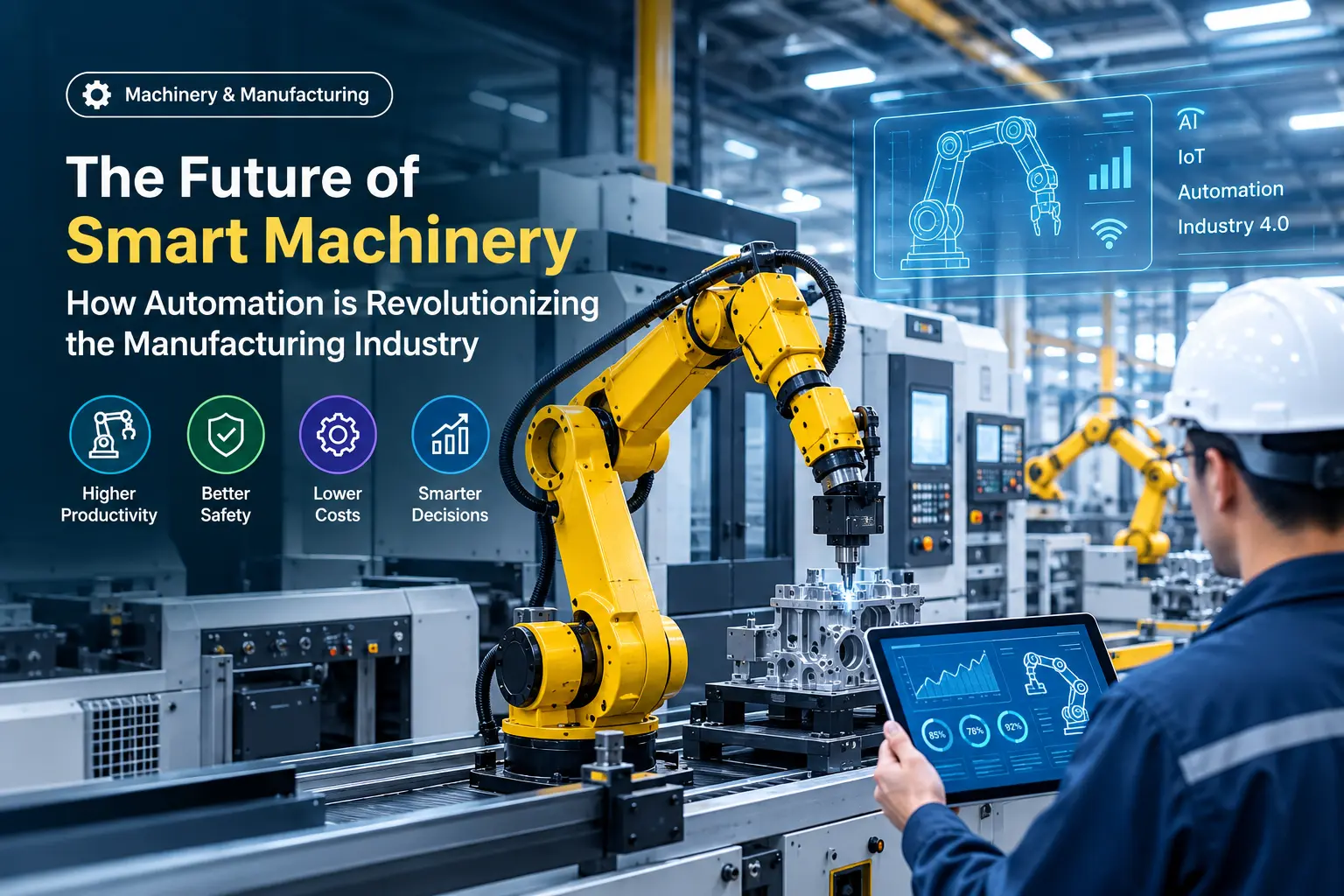
Ask three different people in a manufacturing plant what software runs the operation, and a plant floor supervisor is likely to mention the SCADA system they watch every shift, a production manager might point to the manufacturing execution system tracking work orders and quality data, while a finance or supply chain leader will almost certainly name the enterprise resource planning system used for budgeting, purchasing, and order fulfillment. All three are correct, and understanding how these three distinct but interconnected systems divide responsibility across a manufacturing operation is essential for anyone trying to modernize a plant's technology stack.
Confusion between these three categories of software is extremely common, partly because their capabilities have expanded over the years and increasingly overlap at the edges, and partly because many manufacturers historically implemented each system separately, at different times, without a clear architectural plan connecting them. This guide breaks down exactly what SCADA, MES, and ERP systems each do, how they fit together within the classic automation pyramid model, and how modern manufacturers are increasingly connecting all three into a single, coherent flow of information from the plant floor to the executive suite.
The Automation Pyramid: A Foundational Model
For decades, manufacturing technology has been organized conceptually around a layered model often referred to as the automation pyramid or described formally through the ISA-95 standard. At the base of this pyramid sit the physical sensors and actuators on individual machines. Moving up, the next layer includes the programmable logic controllers and other automation controllers that execute real time control logic. SCADA systems sit at the next layer up, providing real time visibility and control across multiple machines or an entire production area. MES systems occupy the layer above that, managing and coordinating production execution across an entire facility. At the very top of the pyramid sits the ERP system, managing business level planning and resources across the entire enterprise, often spanning multiple facilities and business functions well beyond manufacturing itself. Understanding this layered structure is the key to understanding why these three systems exist as distinct categories in the first place, even as modern software increasingly blurs the lines between them.
What Is a SCADA System?
Supervisory control and data acquisition, or SCADA, systems provide real time monitoring and control of physical processes and equipment, typically presenting operators with a visual interface showing current machine status, alarms, and key process values, along with the ability to issue direct control commands to equipment. SCADA systems operate on a very short time horizon, often refreshing displayed data multiple times per second, and are primarily used by plant floor operators and control room staff who need immediate visibility into what is happening on the production line right now. A SCADA system typically also includes a data historian component, recording process data over time for later analysis and regulatory reporting, but its core function remains focused on the immediate, real time operational picture of the equipment it monitors.
What Is a Manufacturing Execution System?
A manufacturing execution system, or MES, operates one level up from SCADA in both scope and time horizon, managing and tracking the execution of production orders across an entire facility rather than focusing on the real time status of individual machines. MES software typically handles functions such as work order dispatching, tracking material and labor consumption against each production order, capturing quality inspection results, managing genealogy and traceability records, and calculating overall equipment effectiveness and other production performance metrics. Where SCADA answers the question of what a specific machine is doing right now, MES answers the broader question of how the entire production process for a given order is progressing, typically operating on a time horizon spanning a single shift or production run rather than sub second updates.
What Is an Enterprise Resource Planning System?
An enterprise resource planning system, or ERP, sits at the top of the automation pyramid, managing business level functions that extend well beyond the factory floor, including financial accounting, procurement, sales order management, supply chain planning, and human resources. ERP systems operate on a considerably longer time horizon than either SCADA or MES, typically planning and reporting in terms of days, weeks, or months rather than the real time or shift level focus of the layers below. While an ERP system needs to know what quantity of finished product a plant has produced and what raw materials it has consumed, it generally does not need or want the granular, real time detail that SCADA and MES systems handle at their respective layers, relying instead on periodic, summarized data flowing up from those systems.
Comparing SCADA, MES, and ERP Side by Side
| Factor | SCADA | MES | ERP |
|---|---|---|---|
| Primary Focus | Real time equipment monitoring and control | Production execution and tracking | Business planning and resource management |
| Typical Time Horizon | Sub second to seconds | Shift to daily | Days to months |
| Primary Users | Plant floor operators, control room staff | Production supervisors, quality staff | Finance, supply chain, executive leadership |
| Typical Data | Sensor readings, machine states, alarms | Work orders, quality records, labor and material usage | Financial transactions, purchase orders, sales orders |
| Scope | Individual machines or a production area | Entire facility | Entire enterprise, often multiple facilities |
How Data Actually Flows Between the Three Systems
In a well integrated manufacturing operation, data flows both upward and downward through this layered structure continuously. Raw machine data captured by SCADA systems feeds upward into the MES layer, where it is aggregated and contextualized into meaningful production metrics such as completed units, scrap rates, and machine utilization tied to specific work orders. That production data then flows further upward into the ERP system, typically in a more summarized form, updating inventory levels, triggering purchase orders for consumed raw materials, and informing financial reporting. Information also flows downward through the pyramid, with the ERP system pushing new sales orders and production schedules down to the MES layer, which then breaks those orders into specific work instructions and schedules that get executed and tracked at the SCADA and control layer on the actual production floor. This bidirectional flow is what allows a manufacturer to maintain a coherent, synchronized picture of operations from the individual sensor level all the way up to enterprise wide financial reporting.
Where the Boundaries Between These Systems Are Blurring
While the automation pyramid remains a useful conceptual model, modern software has increasingly blurred the boundaries between these three traditional categories. Many SCADA platforms now include basic production tracking and reporting features that historically would have required a separate MES, while many MES platforms have expanded to include scheduling and resource planning capabilities that overlap with functions traditionally handled by ERP systems. Cloud based, modular software architectures are accelerating this blending further, since manufacturers can now assemble a combination of capabilities from different vendors that does not always map cleanly onto the traditional three tier model. Despite this blurring, the underlying functional distinctions described in this guide remain useful for understanding what any given software module is actually responsible for, even when a single vendor's platform bundles capabilities that would have traditionally spanned multiple separate systems.
Common Integration Challenges Manufacturers Face
Connecting SCADA, MES, and ERP systems that were often implemented separately, sometimes by different vendors and at different points in a facility's history, presents real integration challenges that manufacturers need to plan for carefully. Data format inconsistencies are a common obstacle, since a SCADA system might represent a machine state or product code differently than the MES or ERP system expects, requiring careful data mapping and transformation to ensure information flows accurately between layers. Organizational boundaries can also complicate integration, since SCADA and MES systems are often owned and managed by operations and engineering teams, while ERP systems typically fall under IT and finance ownership, meaning a successful integration project usually requires close collaboration across departments that may not have a strong history of working together on shared technology initiatives. Timing mismatches between the real time nature of SCADA data and the periodic, batch oriented nature of many ERP systems also require careful architectural planning, often resolved through an intermediate MES or unified namespace layer that aggregates and contextualizes real time data into a form the slower moving ERP system can consume meaningfully.
The Business Case for Tighter Integration
Manufacturers that successfully integrate these three layers unlock benefits that go well beyond what any single system can deliver on its own. Real time visibility into production status flowing all the way up to the ERP layer allows sales and supply chain teams to give customers considerably more accurate delivery estimates, rather than relying on outdated or manually updated production schedules. Automatic, accurate flow of material consumption data from the plant floor into the ERP system eliminates manual data entry and reconciliation work that consumes significant administrative time in less integrated operations, while also improving the accuracy of inventory and financial records. Perhaps most importantly, tight integration between these layers is what makes many advanced smart factory capabilities possible in the first place, since AI driven production scheduling, predictive maintenance, and quality analytics all depend on having a clean, reliable, real time flow of data connecting the plant floor to the broader business systems that plan and report on that production.
A Practical Example: How the Three Systems Work Together on a Single Order
Consider a customer order entering a manufacturer's ERP system for a batch of a specific product. The ERP system checks available inventory and capacity, then generates a production order and passes it down to the MES layer. The MES system breaks that order into specific work instructions, schedules it against available equipment and labor, and dispatches the instructions to the appropriate production line. As the line runs, the SCADA system monitors real time machine performance, capturing cycle times, temperatures, and any alarms that occur during production, while feeding that real time data continuously up to the MES layer. The MES system aggregates this real time data into completed unit counts, quality results, and material consumption figures tied to the original order, and once the order is complete, passes a summarized record of finished goods, consumed materials, and labor hours back up to the ERP system, which updates inventory levels, records the associated costs, and triggers any necessary customer shipping and invoicing processes. This entire flow, from customer order to shipped product and updated financial records, depends on all three layers working together smoothly, each handling the specific scope and time horizon it is best suited for.
Choosing the Right Level of Integration for Your Operation
Not every manufacturer needs the same depth of integration between these three layers, and the right level of investment depends heavily on the complexity and scale of the operation involved. A small job shop producing a limited number of standard products in stable volumes may find that basic, manual reconciliation between SCADA, MES, and ERP data, perhaps through simple exported reports reviewed periodically by staff, is entirely sufficient for its needs, since the cost and complexity of full real time integration may not be justified by the relatively modest operational complexity involved. A larger, high mix manufacturer producing many different products with frequent changeovers and detailed traceability requirements, on the other hand, typically finds that manual reconciliation becomes untenable at scale, making tighter, more automated integration between these layers not just valuable but practically necessary to maintain accurate records and respond quickly to production issues. Manufacturers evaluating their own integration needs should honestly assess how much manual data reconciliation work their teams currently perform, and how often that manual process introduces errors or delays, since these pain points are usually the clearest signal of how much integration investment is actually justified.
The Role of IT and OT Convergence in Modern Integration Projects
Successfully connecting SCADA, MES, and ERP systems increasingly requires manufacturers to bridge the historical divide between operational technology, traditionally managed by engineering and plant floor teams, and information technology, traditionally managed by a separate corporate IT department with different priorities, security practices, and technical vocabulary. This convergence is not merely a technical exercise but an organizational one, requiring both groups to develop a shared understanding of each other's constraints, with operational technology teams learning to appreciate modern cybersecurity and data governance practices, and information technology teams learning to respect the real time performance and safety requirements that make industrial control environments fundamentally different from typical corporate computing environments. Manufacturers that invest in building this shared understanding early, often through a dedicated cross functional team responsible for integration projects, consistently report smoother implementations than those that treat SCADA, MES, and ERP integration as a purely technical task handled entirely within a single department.
Looking Ahead: How the Automation Pyramid Is Evolving
The traditional strictly layered automation pyramid, while still a useful teaching model, is gradually giving way to a more flexible architecture in leading manufacturing operations. Rather than data moving strictly upward through each layer in sequence, modern unified namespace architectures allow data generated at the SCADA layer to be published once and consumed simultaneously by MES, ERP, and any other authorized application, without requiring that data to pass through each intermediate layer in a rigid, sequential chain. This shift does not eliminate the functional distinctions between SCADA, MES, and ERP described throughout this guide, but it does change how data physically flows between them, generally making integration faster to implement and easier to extend as new applications are added. Manufacturers planning new integration projects in 2027 should evaluate whether a more modern, publish and subscribe based data architecture might serve their long term needs better than replicating the traditional point to point, strictly layered integration patterns that have historically connected these three categories of manufacturing software.
Frequently Asked Questions
Does every manufacturer need all three types of systems?
Smaller manufacturers with simple production processes sometimes operate successfully with just an ERP system and basic SCADA monitoring, adding a dedicated MES layer once production complexity, order volume, or the need for detailed traceability grows enough to justify the additional investment and integration effort.
Can a single software platform handle all three layers?
Some vendors offer platforms that bundle capabilities spanning SCADA, MES, and even basic ERP functions, which can simplify integration for smaller operations, though larger manufacturers with more complex, multi facility operations often still find dedicated systems for each layer, properly integrated, better suited to their specific scale and functional needs.
What is the difference between MES and a unified namespace?
MES is a specific software application focused on managing and tracking production execution, while a unified namespace is a broader data architecture concept that can serve as the connective layer through which SCADA, MES, ERP, and other systems all share data consistently, meaning the two concepts operate at different levels and are not direct substitutes for each other.
Which system should a manufacturer implement first if starting from scratch?
Most manufacturers already have some form of ERP system in place for basic business operations, making SCADA and MES typically the next priorities, with SCADA usually implemented first to establish real time visibility before adding MES capability to manage and track production execution more comprehensively across the facility.
How long does it typically take to integrate SCADA, MES, and ERP systems that were implemented separately?
Integration timelines vary considerably based on the age and compatibility of existing systems, but manufacturers should generally expect a multi month project involving careful data mapping and testing, particularly when connecting older SCADA or ERP systems that were never originally designed with modern integration standards in mind.
Who should own an integration project spanning SCADA, MES, and ERP?
Successful projects typically involve a cross functional team with representation from operations, engineering, and IT, since no single department usually has complete ownership or expertise across all three layers, and a project led exclusively by one group often overlooks important requirements or constraints understood only by the others.
Final Thoughts
SCADA, MES, and ERP systems each serve a distinct and necessary purpose within a manufacturing operation, and understanding how their scope, time horizon, and intended users differ is essential for building a coherent, well integrated technology stack rather than a collection of disconnected systems that each hold only part of the operational picture. As modern manufacturing software continues to blur the traditional boundaries between these categories, the underlying principle remains unchanged: real time control belongs closest to the equipment, production execution and tracking belongs at the facility level, and business planning belongs at the enterprise level, with data flowing smoothly in both directions to keep every layer working from a shared, accurate picture of what is actually happening on the plant floor.