If you are looking for a simple, safe and completely free way to enjoy movies and series on your cell phone, tablet or TV, Tubi – Free Movies and Series stands out as one of the best options available in 2026. With an impressive collection, a clean interface, and support for Portuguese subtitles, the app offers access to thousands of titles free of charge. And best of all, it's available for direct download from the official stores:

Tubi: Free Movies & Live TV
AI-Powered Predictive Maintenance: How Factories Can Reduce Unplanned Downtime
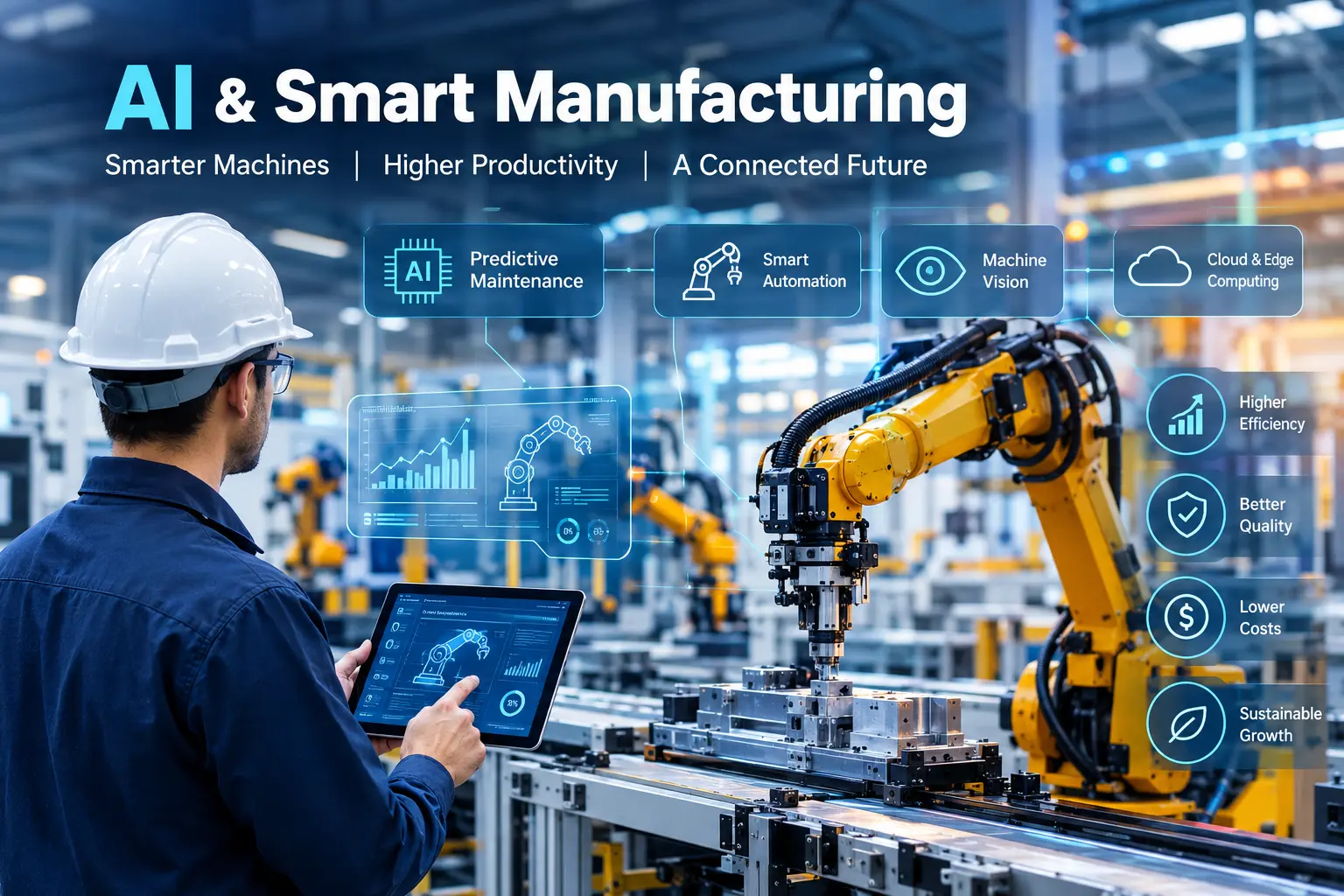
Unplanned downtime remains one of the most expensive problems in manufacturing. A single unexpected failure on a critical machine can halt an entire production line, delay shipments, damage customer relationships, and in some industries trigger costly regulatory reporting. For decades, factories tried to manage this risk with two blunt tools: reactive maintenance, which means fixing equipment only after it breaks, and preventive maintenance, which means servicing equipment on a fixed calendar schedule whether it actually needs it or not. Both approaches waste money in different ways, and neither one actually predicts failure before it happens.
AI-powered predictive maintenance changes that equation entirely. By combining industrial sensors, real-time data streaming, and machine learning models trained on historical failure patterns, predictive maintenance platforms can identify the early warning signs of equipment degradation days, weeks, or sometimes months before a breakdown would otherwise occur. Instead of guessing when a bearing might fail or replacing a part that still has useful life left, maintenance teams get a data-backed answer: this specific machine needs attention, this is the likely failure mode, and this is the recommended window to intervene.
This guide walks through exactly how AI-powered predictive maintenance works, the technology stack behind it, the measurable financial impact it delivers, how it compares to older maintenance strategies, and a practical roadmap for factories that want to implement it in 2027 and beyond.
What Is AI-Powered Predictive Maintenance?
Predictive maintenance is a maintenance strategy that uses real-time condition data and analytics to predict when a piece of equipment is likely to fail, so that maintenance can be performed at the optimal time, neither too early nor too late. What separates AI-powered predictive maintenance from older condition-monitoring approaches is the use of machine learning models that learn patterns directly from data rather than relying purely on fixed threshold alarms set by an engineer. A traditional condition-monitoring system might simply alert an operator when vibration exceeds a preset limit. An AI-driven system, by contrast, continuously learns what normal operating behavior looks like for that exact machine under different load conditions, and flags subtle, compound patterns across multiple sensor readings that a simple threshold would completely miss.
How AI Predicts a Machine Failure Before It Happens
The process begins with data collection. Sensors attached to motors, pumps, compressors, gearboxes, and other rotating or high-wear equipment continuously capture signals such as vibration frequency, temperature, acoustic emissions, oil quality, electrical current draw, and pressure. This raw data streams to an edge computing device on the factory floor or directly to a cloud-based analytics platform, depending on how time-sensitive the application is.
Once collected, the data is fed into machine learning models trained on historical examples of both normal operation and past failures. These models learn to recognize the subtle precursors to specific failure modes, such as the gradual increase in a particular vibration frequency band that typically precedes bearing wear, or a slow drift in motor current that signals developing electrical insulation breakdown. As new data streams in continuously, the model scores the current health of the equipment and estimates its remaining useful life. When the model detects a pattern consistent with developing failure, it generates an alert, often ranked by severity and estimated time-to-failure, which is then routed automatically into the maintenance team's work order system.
Why Unplanned Downtime Is So Expensive
The true cost of unplanned downtime goes far beyond the repair bill itself. When a critical machine fails without warning, the immediate consequences typically include lost production output, idle labor that is still being paid despite not producing anything, rushed emergency repair costs that are often several times higher than a planned repair, and potential damage to adjacent equipment if the failure cascades. Beyond the plant floor, unplanned downtime can also mean missed delivery dates, contractual penalties, and long-term reputational damage with customers who depend on reliable supply. In industries with continuous processes, such as chemical processing, food production, or steel manufacturing, a single unplanned shutdown can also introduce significant safety risk and require a lengthy, costly restart procedure once repairs are complete. These compounding costs are exactly why predictive maintenance has moved from a nice-to-have efficiency project to a core operational priority for manufacturing leadership.
Key Technologies Behind Modern Predictive Maintenance Systems
Industrial IoT Sensors
Wireless vibration sensors, thermal sensors, acoustic sensors, and current transducers are the foundation of any predictive maintenance program. Modern industrial IoT sensors are inexpensive enough to retrofit onto existing legacy equipment, meaning factories do not need to replace their entire machine fleet to start collecting meaningful condition data.
Edge Computing
For machines where a failure could develop or accelerate rapidly, sending all raw sensor data to the cloud for analysis introduces unacceptable latency. Edge computing devices installed near the machinery process high-frequency sensor data locally, running lightweight versions of the machine learning model directly on the factory floor and only sending summarized results or flagged anomalies to the central platform.
Machine Learning and Deep Learning Models
The analytical core of any predictive maintenance platform is its machine learning model. Simpler statistical models work well for equipment with well-understood, single-mode failure patterns, while more complex deep learning models, particularly those built on recurrent neural network or transformer architectures, are increasingly used for equipment with multiple interacting failure modes and large volumes of historical sensor history.
Digital Twins
Some advanced predictive maintenance deployments pair sensor-based monitoring with a digital twin of the equipment, a live virtual model that simulates internal component stress and wear based on real operating conditions. This allows engineers to test 'what if' scenarios, such as running a machine at higher load, and see the projected impact on component life before actually doing it on the physical asset.
Integration With CMMS and Enterprise Asset Management Software
Predictive maintenance data delivers the most value when it flows directly into a computerized maintenance management system or enterprise asset management platform, automatically generating work orders, reserving spare parts inventory, and scheduling technician time around the predicted failure window rather than requiring a human to manually interpret a dashboard alert.
Comparing Maintenance Strategies
| Factor | Reactive Maintenance | Preventive Maintenance | AI-Powered Predictive Maintenance |
|---|---|---|---|
| When Maintenance Happens | After the equipment fails | On a fixed calendar or usage schedule | Based on actual predicted equipment condition |
| Unplanned Downtime | High and unpredictable | Reduced but still possible between services | Significantly reduced through early warning |
| Parts and Labor Waste | Low routine cost, high emergency cost | Parts often replaced before end of useful life | Parts replaced closer to actual end of life |
| Planning Ability | None, fully reactive | Predictable but not condition-aware | High, with estimated time-to-failure windows |
| Data Requirements | Minimal | Basic usage or time tracking | Continuous sensor data and historical failure records |
| Long-Term Cost | Highest overall cost | Moderate cost | Lowest overall cost once fully deployed |
The Financial Case for Predictive Maintenance
Manufacturing leadership evaluating a predictive maintenance investment typically wants to see the numbers before committing budget, and the financial case is usually strong once all the cost categories are accounted for. Reduced unplanned downtime is the most visible benefit, since every hour of avoided downtime on a bottleneck machine directly protects production output and revenue. Maintenance labor also becomes more efficient, since technicians spend their time on machines that actually need attention rather than performing unnecessary scheduled teardowns on healthy equipment. Spare parts inventory can also be optimized, since maintenance teams know with much greater confidence which components are likely to need replacement soon, reducing both emergency parts shipping costs and the working capital tied up in oversized safety stock.
It is also worth factoring in the indirect financial benefits that are easy to overlook. Equipment that is maintained based on actual condition rather than a fixed schedule tends to have a longer overall service life, delaying large capital expenditures on replacement machinery. Insurance providers and safety auditors are also increasingly favorable toward operations that can demonstrate a data-driven maintenance program, which can translate into more favorable coverage terms in industries where equipment failure carries safety implications.
Step-by-Step: Implementing AI-Powered Predictive Maintenance
Step 1: Identify Critical Assets First
Rather than attempting to instrument every machine in the plant at once, successful implementations start by identifying the small number of assets that would cause the most damage if they failed unexpectedly, whether that is due to production bottleneck impact, safety risk, or repair cost. These become the pilot machines for the first phase of deployment.
Step 2: Install Sensors and Establish a Data Baseline
Once critical assets are identified, sensors are installed and left to collect data for a baseline period, typically several weeks to a few months, so the system can learn what normal operating behavior actually looks like for that specific machine under its real production conditions.
Step 3: Train and Validate the Predictive Model
Historical maintenance records, including past failure events and their associated sensor signatures where available, are used to train the machine learning model. The model is then validated against known past failures to confirm it would have actually predicted them with enough lead time to be useful.
Step 4: Integrate Alerts Into Maintenance Workflows
Predictive alerts are only valuable if they translate into action. Integrating the predictive maintenance platform directly with the plant's CMMS or enterprise asset management system ensures that a flagged anomaly automatically becomes a scheduled, prioritized work order rather than an email that gets missed.
Step 5: Expand and Continuously Retrain
After proving value on the initial pilot assets, most factories expand sensor coverage to additional equipment in phases, using the lessons learned and internal expertise built during the pilot. Models should also be periodically retrained as more operating data and failure examples accumulate, since prediction accuracy generally improves over time.
Common Challenges and How to Avoid Them
Not every predictive maintenance deployment succeeds on the first attempt, and most failures trace back to a handful of avoidable mistakes. Poor sensor placement or low-quality sensors can produce noisy data that undermines model accuracy from the start, so it is worth investing in properly rated industrial sensors and having them installed by technicians familiar with the specific failure modes being targeted. Insufficient historical failure data is another common obstacle, particularly for newer or highly reliable equipment that has rarely failed, which is why some platforms use physics-based failure models to supplement limited historical data during the early stages. Organizational resistance can also derail a program if maintenance staff are not brought into the process early, since technicians who do not trust or understand the system's recommendations will often revert to their old scheduling habits regardless of what the software suggests. Finally, treating predictive maintenance as a purely technical IT project rather than a cross-functional initiative involving maintenance, operations, and reliability engineering teams together tends to produce systems that generate accurate predictions nobody actually acts on.
The Role of Cloud Platforms and Data Historians
Behind every predictive maintenance program sits a data historian or time-series database responsible for storing years of sensor readings in a format that can be queried efficiently for model training and trend analysis. Cloud-based industrial data platforms have made this infrastructure far more accessible than it used to be, removing the need for factories to build and maintain their own on-premises data warehouses. These platforms also make it easier to apply predictive models consistently across multiple plants in different locations, since a model trained on data from one facility's fleet of compressors can often be adapted and fine-tuned for a similar fleet at another site, accelerating the rollout of predictive maintenance across a multi-plant manufacturing network.
What to Look for When Choosing a Predictive Maintenance Platform
With a crowded vendor landscape, manufacturers should evaluate predictive maintenance platforms on several practical criteria beyond flashy dashboards. Compatibility with existing legacy equipment matters enormously, since most factories cannot afford to replace machinery just to add monitoring capability. Integration depth with existing CMMS, enterprise resource planning, and historian software determines whether predictions actually translate into automated action or just sit in a separate dashboard nobody checks. The vendor's model transparency is also worth scrutinizing, since maintenance teams are far more likely to trust and act on a prediction when they can see which sensor readings and patterns drove the alert, rather than treating the system as an unexplainable black box. Finally, total cost of ownership should include not just software licensing but sensor hardware, installation labor, and the ongoing cost of any cloud data processing involved.
Industries Seeing the Fastest Predictive Maintenance Adoption
While predictive maintenance is applicable across nearly every industrial sector, adoption is moving fastest in industries where unplanned downtime carries an outsized financial or safety cost. Automotive manufacturing, with its tightly synchronized just-in-time production lines, cannot absorb a surprise stoppage on a stamping press or paint line without cascading delays across the entire plant, making predictive monitoring on these bottleneck assets a priority investment. Oil, gas, and chemical processing facilities face both extreme financial exposure and significant safety risk from equipment failure, which is why rotating equipment such as compressors, pumps, and turbines in these industries were among the earliest adopters of vibration-based predictive monitoring. Food and beverage manufacturers rely heavily on refrigeration, packaging, and filling equipment that must run continuously to avoid product spoilage, making predictive maintenance directly tied to food safety and waste reduction. Heavy industries such as mining, steel, and pulp and paper also see outsized benefits, since the equipment involved is expensive, difficult to replace on short notice, and often operates in harsh conditions that accelerate wear.
Predictive Maintenance and the Broader Push Toward Smart Factories
Predictive maintenance rarely exists as an isolated initiative for long. Once a factory has sensors streaming real-time condition data and a proven track record of acting on that data, the natural next step is connecting that same data infrastructure to broader smart factory initiatives such as production scheduling, energy management, and quality control. A machine flagged as developing a fault, for example, can automatically trigger a production scheduling system to route upcoming orders to an alternate line, minimizing the business impact even before the physical repair takes place. This is why many manufacturers now treat predictive maintenance not as a standalone cost-saving project, but as the foundational data layer for their entire digital transformation roadmap.
Measuring Success: The KPIs That Matter
Manufacturers running a predictive maintenance program need a clear set of metrics to prove the initiative is actually working, rather than relying on anecdotal impressions from the maintenance team. Mean time between failures is one of the most telling indicators, since a well-functioning predictive maintenance program should steadily push this number higher as failure modes are caught and addressed earlier in their development. Overall equipment effectiveness, a metric that combines availability, performance, and quality into a single score, tends to improve as unplanned stoppages decline and machines spend more time running at their intended speed. Maintenance cost per unit of output is another useful figure to track over time, since a mature predictive program should gradually shift spending away from expensive emergency repairs and toward planned, lower-cost interventions. Finally, tracking the percentage of maintenance work that is planned versus unplanned gives leadership a simple, easy-to-communicate signal of how far the transition away from reactive maintenance has progressed.
Frequently Asked Questions
How much can predictive maintenance actually reduce downtime?
The specific reduction varies significantly by industry and how well the program is implemented, but factories with mature predictive maintenance programs consistently report substantial reductions in unplanned downtime compared to purely reactive or calendar-based maintenance approaches.
Do small and mid-size manufacturers need predictive maintenance, or is it only for large factories?
Sensor and software costs have dropped considerably in recent years, and many vendors now offer subscription pricing scaled to smaller operations, making predictive maintenance increasingly practical even for facilities with a modest number of critical machines.
How long does it take to see results after implementing predictive maintenance?
Most programs need an initial data collection and model training period before predictions become reliable, typically ranging from a few weeks to several months depending on how frequently the target equipment experiences meaningful operating variation.
Can predictive maintenance be added to old, non-connected machines?
Yes, retrofit sensor kits are widely available specifically for this purpose, allowing wireless vibration, temperature, and current sensors to be attached to legacy equipment without needing to modify or replace the machine itself.
What is the difference between condition monitoring and predictive maintenance?
Condition monitoring refers to the ongoing measurement of equipment health indicators, while predictive maintenance goes a step further by using that condition data, combined with analytics or machine learning, to actually forecast when a failure is likely to occur and recommend action.
Does predictive maintenance eliminate the need for a maintenance team?
No, predictive maintenance changes how a maintenance team spends its time rather than removing the need for one, shifting technicians away from routine scheduled inspections and toward targeted, higher-value repair work guided by data.
What sensors are most commonly used in predictive maintenance programs?
Vibration sensors and temperature sensors are the most widely deployed, since they are relatively inexpensive and effective at detecting the early stages of common mechanical failure modes such as bearing wear, misalignment, and imbalance, with acoustic and oil analysis sensors often added for more specialized equipment.
How accurate are AI predictive maintenance models compared to human inspection?
Well-trained models can detect subtle, multi-variable patterns across continuous sensor streams that would be effectively impossible for a human inspector to catch during a periodic manual check, though accuracy still depends heavily on sensor quality and the amount of historical data available for training.
Final Thoughts
Unplanned downtime will always carry some cost, but AI-powered predictive maintenance gives factories the ability to see problems coming instead of reacting to them after the fact. The technology has matured to the point where implementation is no longer limited to large enterprises with dedicated data science teams, and the sensors, software, and integration tools required are more accessible than ever. Manufacturers that begin building this capability now, starting with their most critical assets and expanding methodically, will be far better positioned to protect production output, control maintenance costs, and extend the useful life of their equipment in the years ahead.